Solar Energy

Nigeria and Africa-focused solar projects, products, and market updates

WeLight To Invest $650 Million In Nigeria’s Solar Mini-Grids To Power Off-Grid Communities

Pan-African clean energy firm WeLight has unveiled a $650 million plan to scale up solar mini-grid projects across Nigeria, an investment worth about ₦975 billion aimed at bringing electricity to millions in areas with poor or no grid supply. The announcement was shared on X by Olusegun Dada, Special Assistant to the President on Social Media. According to WeLight, the program is expected to grow its rural customer base by ten times and speed up access to dependable, clean power in parts of the country that remain largely unserved. The company, which already runs decentralized solar mini-grids in several African nations, said the new rollout will target communities left out of the national grid managed by the Transmission Company of Nigeria. Instead of relying on long-distance transmission lines, WeLight will install localized solar photovoltaic systems paired with lithium-ion battery storage to deliver power directly to homes and businesses. The model is designed to cut transmission losses and shield communities from nationwide grid collapses. Officials noted the timing is critical as many Nigerian towns still depend on diesel and petrol generators because of frequent outages and insufficient supply from the central grid. WeLight said it will prioritize rural and agricultural areas where steady electricity can drive productivity. Planned uses include agro-processing, irrigation, cold storage, and small-scale manufacturing. Both residential and commercial customers will be connected under the expansion, which the company says will significantly close the electricity access gap in historically neglected regions. “Our mini-grids are built to match local demand,” a company statement read. “This ensures communities get continuous power without depending entirely on the national network.” The $650 million commitment comes weeks after WeLight raised $31 million in new capital to accelerate its entry into Nigeria and other African markets. The round included investment from the International Finance Corporation, the World Bank Group’s private-sector arm, alongside existing backers. The firm pointed to similar projects in East Africa as proof of concept. In Kenya, for example, the Rural Electrification and ­Renewable Energy Corporation has worked with private developers to roll out solar mini-grids in Turkana, Garissa, and Marsabit counties. Nigeria continues to grapple with a major electricity shortfall, with millions of households and businesses forced to self-generate. Off-grid renewable solutions like solar mini-grids have gained traction among government agencies, development banks, and private investors as a faster way to expand access. Energy experts say investments such as WeLight’s are part of a wider push to electrify Africa, particularly in countries like Nigeria and the Democratic Republic of Congo that have some of the largest populations globally without reliable power.
EDP TO DIVEST FULL STAKE IN 68-MW ITALIAN WIND AND SOLAR PORTFOLIO IN EUR 150 MILLION DEAL WITH PLT ENERGIA

Portuguese utility giant EDP has agreed to sell its entire equity interest in a 68-MWac/70-MWdc wind and solar portfolio in Italy, as the company continues to reshape its renewable asset base and recycle capital into new growth markets. In a statement issued on Tuesday, EDP said its renewables unit, EDP Renováveis, signed a sale and purchase agreement with PLT Energia SRL. The transaction values the portfolio at an estimated enterprise value of around EUR 150 million, or about USD 171 million. The final price will be subject to customary adjustments at closing, in line with standard market practice. The assets covered by the deal include four onshore wind farms with a combined capacity of 60 MW, plus one solar photovoltaic plant rated at 9 MWac/8 MWdc. The wind parks are backed by 20-year Contracts for Difference, CfDs, which provide long-term revenue stability. The solar facility operates under 10-year Power Purchase Agreements, PPAs, with offtakers. Geographically, all of the plants are located across southern Italy, specifically in the regions of Puglia, Basilicata and Campania. EDP said the average remaining life of the wind assets is about 11 years, while the solar plant has been operational for less than one year. For EDP, the sale aligns with its broader strategy of asset rotation. The Lisbon-based utility has been actively selling mature renewable projects to fund the development of new capacity in higher-growth markets, while also reducing debt and strengthening its balance sheet. Italy remains a core European market for EDP, but the company has been trimming exposure to older, non-core portfolios. PLT Energia SRL, the buyer, is an Italian independent power producer focused on expanding its renewables footprint domestically. The acquisition will add immediate operating capacity to PLT’s portfolio, along with long-term contracted cash flows from the CfDs and PPAs. EDP noted that the deal remains subject to standard closing conditions, including regulatory approvals. Barring any delays, the company expects the transaction to be completed during 2026. The divestment comes at a time when investor appetite for operational renewables in Southern Europe remains strong, driven by Italy’s decarbonization targets and the steady demand for clean power from industrial and commercial buyers. With 20-year CfDs on the wind assets and new PPAs on the solar farm, the portfolio offers PLT a predictable revenue stream for the next decade or more. By exiting the 68-MW package, EDP frees up EUR 150 million to redeploy into its development pipeline in Europe, North America and Latin America, where the group is targeting gigawatts of new solar, wind and storage projects through the end of the decade.

POLARIS RENEWABLE SIGNS 30-YEAR DEAL WITH CFE FOR 200MW OF SOLAR-PLUS-STORAGE PROJECTS IN MEXICO

Canadian renewable energy firm Polaris Renewable Energy Inc. has signed a mixed investment agreement with Mexico’s state utility Comision Federal de Electricidad, CFE, for three solar-plus-storage projects with a combined capacity of more than 200MW. The agreement was executed through Polaris’ Mexican project structure with fiduciary trustee Banca Mifel SA, Institucion de Banca Multiple, Grupo Financiero Mifel, acting on behalf of CFE. The 30-year deal sets the framework for joint participation by Polaris and CFE in the development, financing, construction, ownership and operation of the three projects. The projects were selected under Mexico’s Mixed Development Program, which aims to procure about 6,500MW of new renewable generation and energy storage capacity by 2029. Polaris CEO Marc Murnaghan said the signing represents a key milestone in advancing the three awarded projects into long-term contracted operating assets. He noted that the agreement reflects strong collaboration between Polaris and CFE. The company is also progressing toward financial close and construction, while advancing a growing pipeline of additional renewable energy and storage opportunities in Mexico. Murnaghan added that Mexico remains a core growth market for Polaris and that the company intends to expand its presence while supporting the country’s energy transition. According to Polaris, both parties will now work to finalize the remaining definitive agreements required for the program. These include power purchase agreements, a trust agreement, management services agreement, operation and maintenance agreement, and other related project documentation. Commercial operation of all three plants is scheduled for 2028. The Mixed Development Program is central to Mexico’s plan to accelerate clean energy deployment and reduce reliance on fossil fuels. By combining solar generation with battery storage, the three Polaris-CFE projects are expected to provide more stable and dispatchable power to the grid, helping to address peak demand periods and improve reliability in regions with growing electricity needs. Government officials have said storage-enabled renewables will be critical to meeting Mexico’s climate and energy security goals over the next decade. For Polaris, the agreement deepens its footprint in Latin America, where it already operates hydro, solar and wind assets. The company said it is prioritizing markets with clear long-term policy frameworks and strong utility partners. With construction set to begin following financial close, the Mexico portfolio is expected to contribute significantly to Polaris’ target of doubling its operating capacity by 2030, while also creating jobs and local supply chain opportunities during the development and operation phases.

WESTERN INVERTER CAPACITY SUFFICIENT TO MEET EU DEMAND, SOLAR COUNCIL SAYS AMID PUSH TO CUT HIGH-RISK SUPPLIERS

Western inverter manufacturers have enough production capacity to fully supply the European Union market, the European Solar Manufacturing Council, ESMC, said this week, as the bloc moves to end EU funding for inverters from high-risk countries. The industry body, which represents European photovoltaic manufacturers, cited new data from S&P Global Energy showing that inverter production capacity in Europe currently stands at around 104 GWac. Manufacturers in the Americas and Asia-Pacific, excluding China, can provide an additional 120 GWac. According to ESMC, more than 53 GWac of European production capacity is available to meet European demand. That figure almost matches total EU solar installations in 2025. “Supply is not the bottleneck. The capacity to replace high-risk vendors already exists today,” said ESMC Secretary General Christoph Podewils. ESMC noted that Western manufacturers already have an established presence across Eastern Europe and can scale up sales and support within about six months. Based on a survey of six Western manufacturers, the council said they have a combined installed base of around 14 GW across eight EU markets, led by Poland. The companies also have about 330 sales and service employees working on the ground or dedicated remotely. The group added that choosing Western inverters will not significantly increase project costs. Citing Wood Mackenzie data, ESMC said switching to Western equipment would add roughly 2% to the cost of utility-scale or commercial solar projects. For residential string inverters the increase would be 3% to 4%, rising to 8% for systems using micro-inverters, power optimisers or hybrid inverters. “The inverter is the brain of every solar installation. Who controls the brain controls the grid,” Podewils said during a panel at the European Sustainable Energy Week, EUSEW, conference in Brussels. “The debate about whether Europe can wean itself off high-risk inverters is over – the capacity is there, the manufacturers are there, and in Eastern Europe they have been there for fifteen years.” The comments come as the EU advances measures to reduce reliance on suppliers deemed high-risk for energy security and critical infrastructure.

INDIA BECOMES WORLD’S THIRD-LARGEST IN RENEWABLE ENERGY CAPACITY, BUT IMPORT DEPENDENCE REMAINS

India has moved up to become the world’s third-largest country in installed renewable energy capacity, according to a new report by Morgan Stanley, as the country pushes to cut reliance on fossil fuel imports and meet its climate targets. The report said India’s energy transition will help reduce external dependence in the long term, but its success will hinge on how quickly domestic manufacturing of critical components such as solar cells, wafers, and polysilicon can be scaled up. Data from the Ministry of New and Renewable Energy, MNRE, shows rapid growth in domestic production. Solar module manufacturing capacity nearly doubled from 38 gigawatts in March 2024 to 74 gigawatts in March 2025. Solar cell capacity also rose sharply, from 9 gigawatts to 25 gigawatts over the same period. Despite the expansion, India continues to rely heavily on imports for upstream parts of the solar supply chain. In the financial year 2025, the country imported about 35 million solar modules worth approximately 1.6 billion US dollars. The report estimates that 60 to 80 per cent of those imports came from China. Overall, non-fossil fuel sources now account for more than half of India’s total installed power capacity. Clean energy capacity has crossed 262.7 gigawatts, representing over 50 per cent of the national total. Solar and wind power made up the bulk of new additions. Morgan Stanley noted that while downstream manufacturing has grown, localizing wafer and polysilicon production remains a key challenge. Building capacity in these segments will be crucial for India to secure its supply chain, lower costs, and meet its renewable energy goals without continued import exposure. The government has set ambitious targets to expand renewable energy as part of its broader energy security and decarbonization strategy.

IVORY COAST COMMISSIONS 52.4MW SOLAR PLANT IN PUSH TO MEET 2035 RENEWABLE ENERGY TARGET

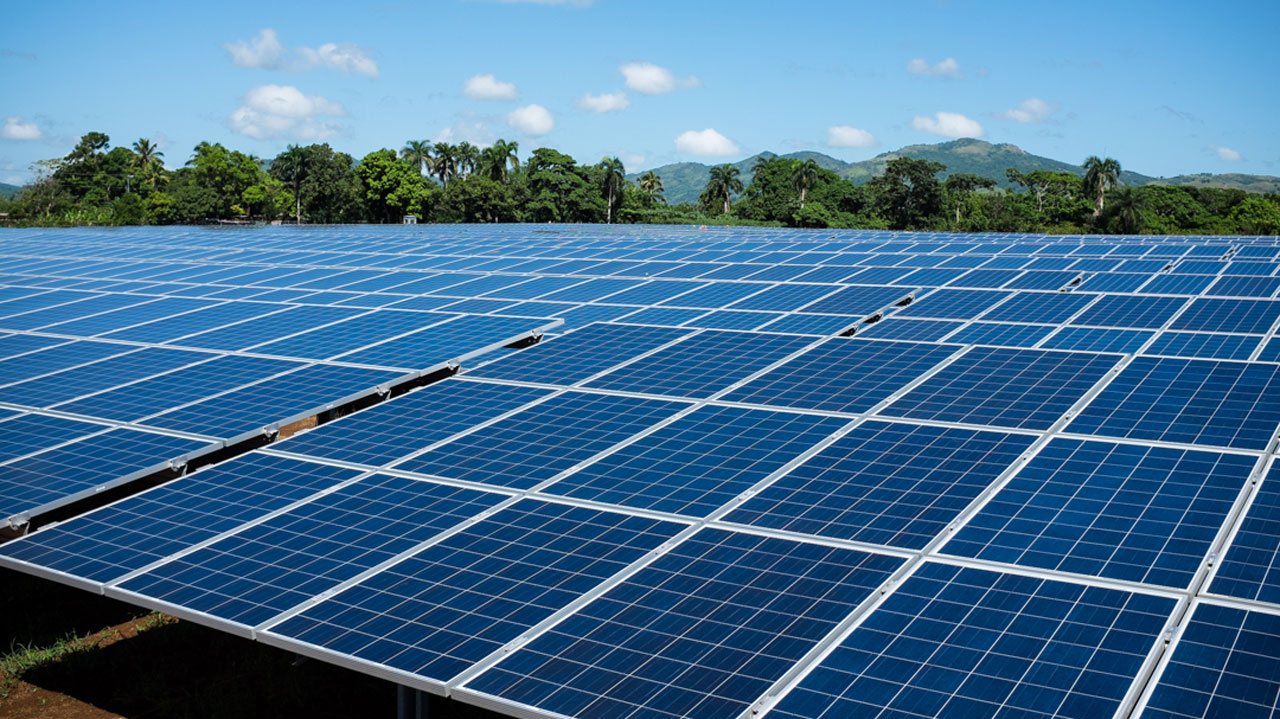
I­vory Coast on Friday inaugurated a new 52.4-megawatt, MW, solar power plant in the north of the country, marking another major step in the government’s drive to expand clean energy and meet climate goals set in 2021. The Ferke Solar plant, located in Ferkessedougou, was officially opened in a ceremony attended by government officials, energy sector stakeholders, and development partners. Mines Minister Mamadou Sangafowa Coulibaly, who commissioned the facility, said the project reflects the administration’s commitment to diversifying the national electricity mix and accelerating the energy transition. “Today’s ceremony fits perfectly with the strategy for Ivory Coast… namely to accelerate the country’s energy transition by diversifying its electricity mix through the expansion of renewable energy capacity,” Coulibaly said at the event. According to PFO Africa, the Ivorian infrastructure investment group behind the project, the plant will supply electricity to 370,000 households and directly serve about 2 million people, primarily in the northern Ferkessedougou region and surrounding communities. The company noted that the new solar facility will help reduce pressure on the national grid in the north, an area that has historically faced power supply challenges. It is also expected to lower transmission losses and improve energy reliability for homes, businesses, and public institutions in the region. Construction of the plant was financed by PFO Energies, a subsidiary of PFO Africa. The group holds 100 per cent Ivorian shareholding. The Ferke Solar plant will operate on a Build-Own-Operate-Transfer, BOOT, basis. Under the arrangement, PFO Energies will build, own, and operate the plant for a defined period before transferring ownership to the Ivorian government. Officials said the model is designed to attract private investment into the power sector while ensuring that critical energy infrastructure eventually comes under state control. The launch comes as Ivory Coast, the world’s largest cocoa producer, seeks to reposition itself as a leading electricity supplier in West Africa. The government aims to have 46 per cent of its electricity mix come from renewable sources by 2035, up from current levels dominated by thermal generation. Ivory Coast currently has an installed power capacity of roughly 3,000 MW. The bulk of this is generated from oil and gas-fired plants. Beyond meeting domestic demand, the country already exports electricity to Ghana, Burkina Faso, Benin, Togo and Mali, and officials say expanding renewables will strengthen its role as a regional power hub. Energy analysts say the addition of utility-scale solar is critical to achieving the 2035 target, reducing dependence on imported fossil fuels, and shielding consumers from volatile global gas prices. The Ferke project adds to a growing pipeline of renewable developments in Ivory Coast, including hydro and solar initiatives aimed at cutting carbon emissions while expanding access to electricity nationwide. Government officials said more solar and hybrid projects are expected to be rolled out in the coming years as part of the national climate and energy strategy.