Policy & Regulation

Government policy, regulatory decisions, international climate agreements affecting Africa

Government Extends ALMM Framework To Ingots And Wafers To Boost Domestic Solar Manufacturing

In a major push to deepen local value addition in the solar sector, the Government of India has announced an expansion of the Approved List of Models and Manufacturers (ALMM) framework to include solar ingots and wafers. The move is aimed at strengthening domestic manufacturing, cutting import reliance, and building a more resilient clean energy supply chain. The Ministry of New and Renewable Energy (MNRE) on Saturday unveiled ALMM List-III, which specifically covers ingots and wafers. The new list will take effect from June 1, 2028. From that date, all solar power projects in the country, including those under net metering and open access categories, will be required to source wafers only from manufacturers featured on the ALMM List-III. Announcing the decision on social media, Union Minister for New and Renewable Energy Pralhad Joshi called it a “decisive step” toward building a robust solar manufacturing ecosystem in India. “The extension of ALMM to ingots and wafers will give a strong fillip to domestic production, improve supply chain resilience, reduce our dependence on imports, and ensure higher quality standards across the entire solar value chain,” Joshi said. Under the revised provisions, any bids submitted after a specified cut-off date under the Electricity Act will have to mandatorily use wafers that comply with ALMM List-III. To ensure adequate domestic capacity before the list comes into force, the Ministry said the first version of List-III will be published only after at least three independent manufacturers with a combined production capacity of 15 gigawatts become operational in India. In addition, companies seeking to be included will also need to demonstrate equivalent ingot manufacturing capacity. This requirement, officials explained, is intended to promote upstream integration and prevent a situation where the country only assembles downstream products while remaining dependent on imported upstream components. The government has built in safeguards for projects that are already in the pipeline. Through grandfathering provisions, existing projects will be allowed to proceed without having to comply with the new wafer mandate. The Ministry also clarified that the existing Domestic Content Requirement (DCR) norms will continue unchanged. This means developers working under DCR tenders will still have to meet those separate domestic sourcing obligations. The expansion of ALMM comes as India accelerates toward its target of 500 gigawatts of non-fossil fuel capacity by 2030. Policy makers say controlling more stages of the solar manufacturing process domestically will be critical to achieving that goal in a cost-effective and secure manner. Industry analysts note that wafers and ingots represent a crucial upstream segment where India has so far had limited manufacturing presence. By mandating domestic sourcing from 2028, the government is signaling to investors that long-term demand will be anchored in locally made components. Officials expect the policy to encourage new investments, technology transfer, and scale-up of production lines. It is also expected to create jobs and improve quality control across the value chain, from polysilicon to finished modules. With this latest step, the government is reinforcing its broader vision of Atmanirbhar Bharat in clean energy. By bringing ingots and wafers under the ALMM umbrella, India is moving closer to having end-to-end domestic capability in solar manufacturing, a move seen as essential for both energy security and the country’s climate commitments.


REAN Urges Bigger Investment And Policy Backing To Drive Nigeria’s Clean Energy Goal

The Renewable Energy Association of Nigeria (REAN) has called for more funding, deeper collaboration among industry players, and consistent government support to speed up Nigeria’s shift to renewable power and make electricity more affordable across the country. Speaking at the maiden Solar & Storage Live Nigeria Conference on Saturday, REAN President and CEO of A4&T Power Solutions, Ayo Ademilua, said Nigeria is blessed with abundant renewable resources such as solar, hydro, wind, and biomass. He stated that tapping these resources fully will improve power supply, boost energy security, and broaden the nation’s energy mix. Ademilua explained that the conference was put together to link Nigerian renewable energy stakeholders with international manufacturers, technology firms, and investors in order to grow the local clean energy market. The event assembled policymakers, investors, equipment makers, and project developers to discuss opportunities in solar energy, battery storage, and other clean technologies. Describing it as the largest renewable energy gathering in Nigeria this year, Ademilua said the goal was to expose local companies to global innovations and attract fresh capital into the fast-expanding sector. He also addressed concerns about cost, noting that solar technology has become much cheaper over the last 10 years due to technological progress and wider adoption. He added that as global production increases, prices of renewable products continue to fall, making clean energy more cost-effective than fossil fuels in the long run. “Renewable energy should not be judged only by upfront cost. It is an asset that delivers value for many years, unlike fossil fuels that require continuous spending on fuel,” Ademilua said. He praised REAN members for partnering with Solar & Storage Live South Africa to bring the conference to West Africa for the first time. The South African edition has run for more than 15 years. Also speaking, the Managing Director/CEO of the Rural Electrification Agency (REA), Abba Aliyu, said Nigeria’s renewable energy space is entering a new phase powered by artificial intelligence, battery storage, and private sector participation. Aliyu disclosed that REA has deployed AI-driven planning and monitoring tools to map over 750,000 communities nationwide. This, he said, helps government determine the best electrification model for each area, whether mini-grids, solar home systems, or grid extension. He added that the agency is rolling out AI-enabled smart meters and centralized monitoring systems to improve mini-grid performance and ensure greater accountability. According to him, battery storage represents the next major opportunity in Nigeria’s power sector, and investors should position themselves as deployment scales up. Aliyu further noted that programs such as the Distributed Access through Renewable Energy Scale-Up and the upcoming Desert to Power initiative are designed to reduce investment risks and attract private capital. He said collaboration with state governments has also improved, with faster land access, better policy alignment, and stronger investment promotion. The conference featured panel sessions with regulators, legal experts, distribution companies, and renewable developers. Discussions focused on reforms required to unlock embedded generation, captive power, mini-grids, and energy storage as Nigeria works to expand access and strengthen energy security.

APC Youth Wing Backs Tinubu’s Renewable Energy Plan

The Youth Wing of the All Progressives Congress, APC, says it will fully support President Bola Tinubu’s push for renewable energy to help grow Nigeria’s economy. APC National Youth Leader, Dayo Israel, made the pledge on Monday at the opening of the Dr. Mustapha Abdullahi Energy Leadership Fellowship, MAELF, in Abuja. The 7-day training program is for young professionals in the energy sector. It will focus on renewable energy, climate action, energy policies, leadership and good governance. Speaking at the event, Mr. Israel said poor power supply is still the biggest problem affecting businesses and industries in Nigeria. He said the youth wing is ready to work with the Tinubu government to solve the problem. “Energy has been a major problem in Nigeria, and the President has said that if he doesn’t fix the energy issue, we should hold him responsible,” Israel said. “As a party, we must support the President to achieve his energy goals.” He explained that the fellowship was set up to link young people in the energy space with government agencies and decision makers. Participants will meet with the Energy Commission of Nigeria, the Renewable Energy Agency and other energy bodies to discuss solutions. “The focus is on renewable energy, biogas and other clean sources. We want ‘UP NEPA’ to be a thing of the past,” he added. “Small businesses need power. Industrialization needs power. That is why we must bring in new people with new ideas.” Mr. Israel also announced a N17.5 million grant for the fellows. The grant is supported by Dr. Mustapha Abdullahi and Lagos State Governor, Babajide Sanwo-Olu. He said the money and other support will help young Nigerians grow their energy businesses. He further said that President Tinubu’s big road projects, like the Lagos Coastal Road, Badagry Expressway and Sokoto-Badagry Highway, will only work if there is steady electricity. “When you build roads, you build industries. You need power at the heart of all of these things,” he said. One of the fellows, Nafisat Ovurebu, who co-founded Fosun Solar Energy Nigeria Limited, said Nigeria does not lack energy resources, but lacks reliable supply. “We have abundant energy resources, but that does not automatically translate to reliability,” she said. She added that programs like MAELF can help find lasting solutions by looking at how power is generated, distributed and funded. She expressed hope that the fellowship will prepare young professionals to help fix the power sector.

Israeli Company Switches On Second Solar Plant in Romania as Clean Energy Push Grows

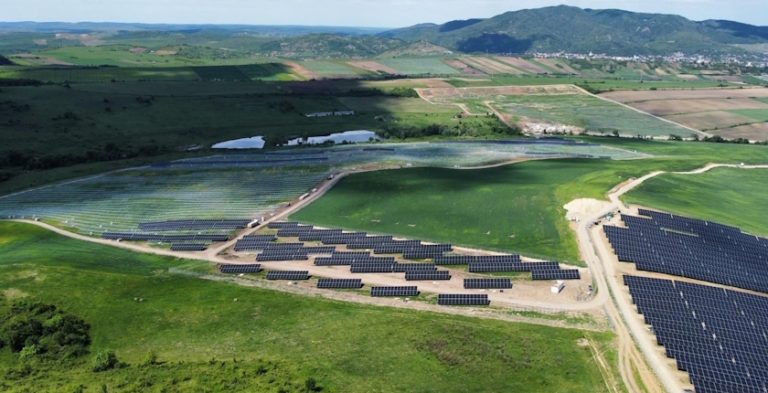
Israeli energy company Shikun and Binui Energy has officially started commercial operations at its second solar power plant in Romania. The new facility is located in Șimleu Silvaniei, in Sălaj county in the northwest part of the country. It has a peak capacity of 104 MW, which means it can produce enough electricity to power tens of thousands of homes. The launch comes right after the company reached the “ready-to-build” stage for another project in Romania — the Deleni hybrid power plant. With the new Șimleu Silvaniei plant now running, Shikun and Binui Energy’s total solar capacity in Romania has gone up to 175 MW. The company said it is not stopping there. It is currently working on new renewable energy projects in Romania that add up to 1.16 GW of power generation. That’s more than 10 times the size of the new plant. In addition, the company is developing 730 MWh of battery storage. Batteries are important because they store solar power during the day and release it at night, helping to keep the electricity grid stable. Both of Shikun and Binui’s solar plants in Romania were built by CJR Renewables, a company that handles engineering, procurement and construction for renewable projects. The first plant is in Satu Mare county, right next to Sălaj county. The second one is the new Șimleu Silvaniei site. Two years ago, Raiffeisen Group approved a €49 million loan to help fund the construction of the Șimleu Silvaniei plant. Shikun and Binui Energy focuses on building and running clean energy projects. Its work includes solar farms, solar thermal systems, battery storage, pumped storage, and agrivoltaics — which is when farming and solar panels are used on the same land. The company is part of the larger Shikun and Binui group, which also works in infrastructure and real estate. The group first came to Romania 20 years ago and has been expanding its presence since then. CJR Renewables also shared news about another project it built. A month ago, it said the Iepurești photovoltaic plant southwest of Bucharest, in Giurgiu county, had started testing. That plant is even bigger, with a capacity of 169 MW. Once fully operational, it will add even more solar power to Romania’s grid. Romania has been attracting more investment in solar and wind energy as the country works to cut reliance on fossil fuels and meet EU climate goals. With new plants like Șimleu Silvaniei and Iepurești coming online, and more projects in the pipeline, Romania’s renewable energy sector is growing fast. Shikun and Binui Energy says it plans to keep investing in the country and support Romania’s shift to cleaner, more affordable electricity.

Uk Approves 740Mw One Earth Solar Farm, Set To Become Country’s Second-Largest

The UK government has granted planning consent for the 740MW One Earth Solar Farm, a major renewable project straddling the Nottinghamshire-Lincolnshire border. Once built, One Earth will rank as the second-largest solar facility in the UK, trailing only the 800MW Springwell Solar project that received approval in April. The development will include a large-scale photovoltaic array paired with a battery energy storage system. Officials said the site will have enough capacity to power more than 200,000 homes across the UK. The project was originally co-developed by Danish energy group Ørsted and PS Renewables. Responsibility for Ørsted’s share has since transferred to Perigus Energy, a platform under Copenhagen Infrastructure Partners, following CIP’s acquisition of Ørsted’s European onshore renewables portfolio earlier this year. The Department for Energy Security and Net Zero confirmed One Earth is the 30th nationally significant clean energy project approved since July 2024. Just last week, the department also signed off on two other solar schemes in England: the 320MW Peartree Hill project and the 150MW Dean Moor project. Energy Secretary Ed Miliband said the approvals reflect the government’s strategy to strengthen energy security through faster clean power deployment. “The only way to guarantee energy security is to take a pro-growth approach and build more clean energy in Britain. That is exactly what this Government has been doing for the past two years,” Miliband stated. The announcement follows recent planning reforms introduced by the government to speed up delivery of major infrastructure. The changes remove mandatory pre-application consultation requirements for large projects, a move expected to cut up to 12 months off the planning timeline. Construction timelines for One Earth have not yet been announced.

UNDP URGES FASTER SHIFT TO RENEWABLES, SAYS OIL DEPENDENCE RAISES CONFLICT AND SUPPLY RISKS

The United Nations Development Programme has urged countries to speed up their move away from fossil fuels to renewable power, cautioning that continued reliance on oil leaves nations exposed to conflict, supply shocks, and environmental harm. Speaking at the Abuja launch of the Nigeria component of the Africa Minigrids Programme on Thursday, UNDP Resident Representative in Nigeria, Ms. Elsie Attafuah, said recent global energy developments have underscored the pressing need for energy systems that are both cleaner and more resilient. She pointed to ongoing geopolitical tensions as evidence of the world’s vulnerability when it depends heavily on petroleum. Citing the Strait of Hormuz, she noted that the waterway only gained widespread attention during the recent Iran-related crisis, yet any interruption there would have far-reaching consequences worldwide. According to Attafuah, the central challenge is no longer the availability of oil and gas reserves, but the instability of international supply chains that can bring economies to a standstill when they are disrupted. She further observed that many African oil-producing states have endured extended conflicts tied to petroleum resources. In contrast, she said Africa has vast renewable energy potential that can support long-term growth without triggering resource-driven disputes. She added that expanding clean energy would also cut pollution and help address the climate impacts already affecting the continent. Attafuah described the Africa Minigrids Programme as one of UNDP’s most far-reaching energy access efforts. The initiative was unveiled with UNDP Administrator Achim Steiner at COP27 in 2022. She said it  breaks away from piecemeal, donor-driven rural electrification by using a model built for scale and driven by private capital. The programme, she explained, emphasizes sustainability and business viability by opening space for private investors while supplying low-cost clean power to communities that are off the main grid. Communities that once relied on expensive diesel, she added, would now pay for electricity from renewable mini-grids, allowing investors to recoup costs and reducing overall energy expenses. She argued that Africa is uniquely placed to lead a global transition to renewables, given that millions still lack electricity and the continent is not locked into extensive legacy fossil infrastructure. Governments, she said, should treat renewable mini-grids as strategic, long-term investments that can reshape national power systems over the next 20 years, rather than as isolated rural projects. On Nigeria’s role, Attafuah said the country was chosen as the programme’s flagship because of its established renewable energy framework and government support, which make it well-positioned to attract new international financing. She noted that the initiative is already producing concrete outcomes, and stressed that its ultimate measure of success will be the wider social and economic change it delivers, beyond just megawatts of electricity.