Innovation & Technology

Clean tech startups, battery innovation, EVs, smart grids, energy software

Qualitas Energy Launches Tender For Up To 517 GWh/Year From Chilean Renewables Portfolio

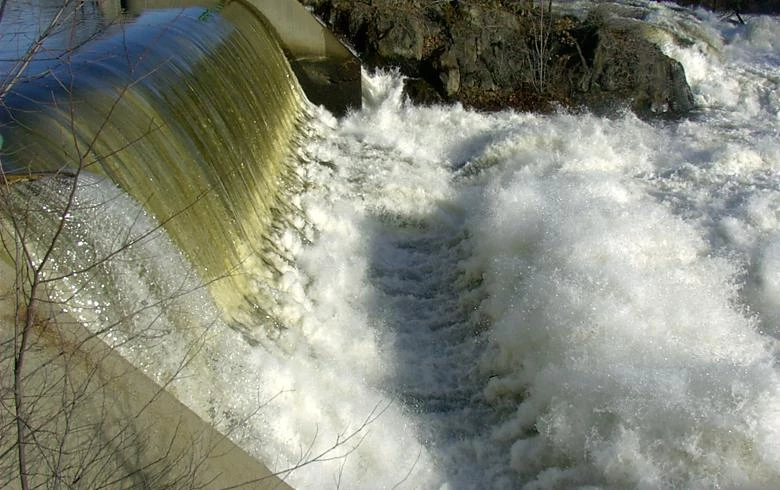
Spanish renewables investor and fund manager Qualitas Energy has launched a competitive process to sell electricity from its portfolio of distributed generation and utility-scale plants in Chile, with contracts covering up to 517 GWh per year, energy marketplace Plataforma Energia announced. According to Plataforma Energia, which is coordinating the process through its online marketplace, the company is seeking to place power from two segments: its small distributed generation plants, locally known as PMGDs, and larger utility-scale projects located in central Chile and the Coquimbo region. The offering includes both physical and financial power purchase agreements with supply set to begin in 2028. Bidders can choose from 24/7, solar-only, or night-time supply products. Contract terms on offer range from 10, 12, to 15 years. The tender is open to a broad group of market participants, including power generators, electricity retailers, financial traders, investment banks, hedge funds, and large unregulated electricity consumers. Based on the maximum annual volume of 517 GWh and the longest 15-year term, Plataforma Energia estimates the process could cover more than 5,000 GWh of electricity over the lifetime of the contracts. Qualitas Energy entered the Chilean market in mid-2023 with the acquisition of a run-of-river hydropower plant. The firm subsequently opened an office in Santiago and expanded its footprint through Qualitas Energy Fund V with the purchase of a solar photovoltaic portfolio. The company said its mandate in Chile focuses on four core technologies: solar, wind, run-of-river hydro, and battery energy storage.

NIGERIA COMMENCES CONSTRUCTION OF 42 CLEAN ENERGY PROJECTS TO POWER 40,000 HOMES IN ADAMAWA, KEBBI

The Rural Electrification Agency, REA, has launched construction of 42 renewable energy projects in Adamawa and Kebbi states in partnership with federal and state governments, as part of a push to expand electricity access and power economic growth in underserved communities. The rollout includes 39 mini-grid projects in Adamawa State and a 3.5-megawatt solar power plant in Kebbi State. Both are being delivered under the Federal Government’s rural electrification programme. In Adamawa, the government flagged off the Distributed Access through Renewable Energy Scale-up Programme. The package comprises three interconnected mini-grids and 36 isolated mini-grids. The interconnected facilities will be sited in Kofare, Saminaka and Mbamba, with capacities of 10MW, 2.6MW and 890kW respectively. Speaking at the groundbreaking ceremony on Monday, Minister of Power Joseph Olasunkanmi Tegbe said the Adamawa projects would add close to 27MW of clean electricity to communities across the state. According to him, about 40,000 homes and businesses in Kofare, Saminaka, Mbamba, Gulak, Michika, Shuwa, Bazza, Belel, Ganye, Song, Hong, Mubi, Guyuk and other areas are expected to benefit. He added that the intervention will also support around 6,000 MSMEs — including welders, tailors, grain millers, cold-room operators, ICT firms and agro-processors — and connect over 100 public institutions such as schools, health centres and water facilities. Tegbe said the mini-grids are designed to complement the national grid in areas with poor or no supply, while also attracting private investment into renewable energy. He commended Governor Ahmadu Umaru Fintiri for providing land and other support for project implementation. Fintiri described the projects as a critical step toward improving power access in the state. REA Managing Director, Dr. Abba Abubakar Aliyu, said the initiative aligns with the agency’s mandate to expand electricity access through renewable energy solutions. In Kebbi, Governor Nasir Idris performed the groundbreaking for a 3.5MW solar power project and the Lot 7 Design, Supply and Installation of 33kV power infrastructure in Ambursa. Idris said the solar plant, which will include battery storage to provide power after sunset, will boost supply across the state and drive socio-economic activity. The state government provided the project site at no cost to the contractor, Kelm Elicon Joint Venture, and urged timely delivery. Aliyu disclosed that President Bola Ahmed Tinubu has approved a $750 million facility for REA to deploy interconnected mini-grids nationwide. About $10 million will go into the Kebbi project, which is expected to serve more than 1,000 households and key facilities including Ahmadu Bello International Airport in Birnin Kebbi. He said the investment will improve power reliability, support businesses and strengthen economic development in the state. Ali Kobeissi, CEO of Kobeissi Electrical and Mechanical Engineering Ltd., assured that the Kebbi solar project will be completed within eight months and called on host communities to support workers during construction. Officials said the projects in Adamawa and Kebbi form part of the Federal Government’s wider strategy to expand electricity access through renewable energy, increase private sector participation, and improve power supply in rural and peri-urban communities.

SEOUL, SOUTH KOREA — SK INC. AND KKR LAUNCH KOREA’S LARGEST CLEAN ENERGY COMPANY

SK Inc. (“SK”) and KKR, a leading global investment firm, have signed final agreements to create Korea’s largest renewable energy company, with a value of about KRW 2 trillion, or roughly $1.3 billion. Through this new company, called the “Platform,” SK and KKR will combine renewable energy assets that were previously held by different SK companies into one single business. These assets cover solar power, wind power on land and at sea, and fuel cells, and the new setup will allow both companies to use their experience in running projects and investing in clean energy. This launch is the latest project between KKR and SK, and it builds on a long relationship that already includes several other collaborations. The new company will help Korea meet the fast-growing demand for clean electricity from AI data centers, semiconductor factories, and other large industrial users. In the beginning, KKR will have management control of the company, while SK will be an equity investor and will keep the option to discuss taking control in the future. The Platform will bring together renewable energy businesses from SK Innovation, SK ecoplant, and SK eternix, so it will cover the full process from project development and construction to operation and maintenance. By combining all of these parts, the company can operate on a larger scale and run more efficiently. The Platform will manage all types of renewable energy except hydrogen, including solar power, offshore wind, onshore wind, and fuel cells. With this scale, the Platform will be Korea’s biggest renewable energy business. It currently has about 1.7 gigawatts of capacity in operation, and its development plans will increase that to 10 gigawatts in total. That amount of power is enough to run 100 large data centers that each use 100 megawatts, nonstop and at the same time. At this size, the Platform is in a strong position to provide steady, large-scale clean power to Korea’s most demanding industrial customers, from AI data centers to global semiconductor production lines and other heavy users. Keith Kim, a Partner at KKR, said they are pleased to work with SK, which is a strong local partner with deep operational experience in Korea. He added that Korea is one of Asia’s most attractive markets for renewable energy because there is strong demand for clean power from the semiconductor, data center, and manufacturing sectors. Together, KKR and SK are building a leading, large-scale renewable energy company that can supply reliable clean power to Korea’s most energy-intensive industries. SK is combining these renewable energy businesses as part of a planned effort to reshape its portfolio and make it more sustainable and competitive. By bringing together the financial strength of a global fund with SK’s ability to execute projects, SK aims to respond to the rising demand for clean energy and create a business model that can grow over the long term. KKR is funding this investment mainly through its Asia Pacific infrastructure strategy. KKR is one of the most active infrastructure investors in the world, with more than $100 billion in infrastructure assets under management and over $31 billion invested in energy transition and renewable infrastructure since 2011. In Asia Pacific, KKR has already supported the region’s clean energy shift through companies such as Serentica Renewables in India, which supplies power to large industrial users, CleanPeak Energy in Australia, which runs a distributed energy business, and Zenith Energy in Australia, which provides off-grid energy solutions. SK plans to use the launch of the Platform to strengthen its renewable energy business and support its future growth. At the same time, SK will continue to adjust its portfolio to improve capital efficiency and make its overall business more competitive. KKR is a leading global investment firm that provides alternative asset management, as well as capital markets and insurance solutions.

NEW PROJECT MEDIA EXPANDS INTO ASIA-PACIFIC WITH INTEGRATED RENEWABLES AND DATA CENTER COVERAGE

Market intelligence firm New Project Media, NPM, has entered the Asia-Pacific region, extending its data and events coverage to one of the world’s fastest-growing power and digital infrastructure markets. The company said its APAC platform will start by tracking Australia, Japan, South Korea, Taiwan, and key Southeast Asian markets, with plans to broaden coverage across the wider region over time. The service will monitor renewable energy project pipelines, power market activity, grid interconnection, policy and regulatory changes, financing, mergers and acquisitions, and data center development. By combining renewables and data center intelligence at launch, NPM said it is applying the same supply-and-demand model it uses in other markets to APAC from the outset. Shaun Drummond will head the expansion. Drummond, who previously served as APAC Managing Editor at Infralogic, will lead NPM’s editorial direction and manage the company’s Asia-Pacific reporting team. The move follows NPM’s established growth pattern. It introduced its North American utility-scale coverage in January 2020, added distributed generation in April 2023, entered Europe after acquiring Energy Rev and launching coverage in April 2024, and rolled out data center coverage in February 2025. “APAC coverage is a defining milestone for NPM and marks our transition into a truly global intelligence platform,” said Ken Meehan, Founder and Chief Executive of New Project Media. He noted the firm began with utility-scale renewables in North America and has since expanded into distributed generation, Europe, data centers, API integrations, and AI-driven intelligence through NPM Edge. “APAC brings that full investment cycle together and extends our platform into one of the most important growth regions for power, renewables and digital infrastructure,” Meehan added. Brett Birman, Chief Commercial Officer, said client demand is driving the launch. “APAC is increasingly important to our customers, yet it remains complex and difficult to track with consistency,” Birman said. “That is exactly where NPM has always created value. We help clients see market and participant activity earlier, save time, assess what is viable and act before opportunities become obvious to everyone else.” New Project Media provides market intelligence, data, and events to 500 global clients, including developers, investors, advisers, corporates, and infrastructure operators.