News & Industry

General breaking news and cross-sector stories

REAN Urges Bigger Investment And Policy Backing To Drive Nigeria’s Clean Energy Goal

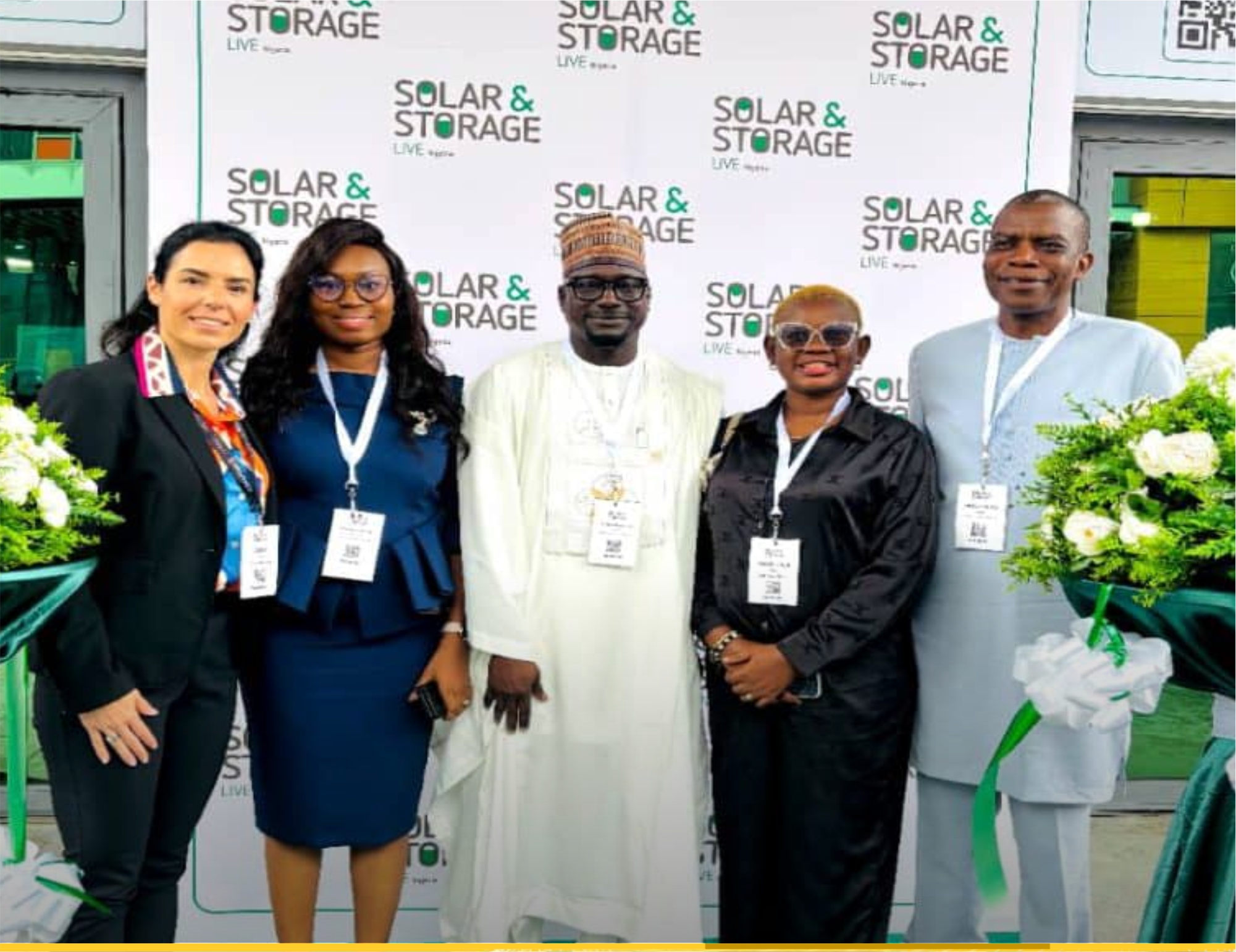
The Renewable Energy Association of Nigeria (REAN) has called for more funding, deeper collaboration among industry players, and consistent government support to speed up Nigeria’s shift to renewable power and make electricity more affordable across the country. Speaking at the maiden Solar & Storage Live Nigeria Conference on Saturday, REAN President and CEO of A4&T Power Solutions, Ayo Ademilua, said Nigeria is blessed with abundant renewable resources such as solar, hydro, wind, and biomass. He stated that tapping these resources fully will improve power supply, boost energy security, and broaden the nation’s energy mix. Ademilua explained that the conference was put together to link Nigerian renewable energy stakeholders with international manufacturers, technology firms, and investors in order to grow the local clean energy market. The event assembled policymakers, investors, equipment makers, and project developers to discuss opportunities in solar energy, battery storage, and other clean technologies. Describing it as the largest renewable energy gathering in Nigeria this year, Ademilua said the goal was to expose local companies to global innovations and attract fresh capital into the fast-expanding sector. He also addressed concerns about cost, noting that solar technology has become much cheaper over the last 10 years due to technological progress and wider adoption. He added that as global production increases, prices of renewable products continue to fall, making clean energy more cost-effective than fossil fuels in the long run. “Renewable energy should not be judged only by upfront cost. It is an asset that delivers value for many years, unlike fossil fuels that require continuous spending on fuel,” Ademilua said. He praised REAN members for partnering with Solar & Storage Live South Africa to bring the conference to West Africa for the first time. The South African edition has run for more than 15 years. Also speaking, the Managing Director/CEO of the Rural Electrification Agency (REA), Abba Aliyu, said Nigeria’s renewable energy space is entering a new phase powered by artificial intelligence, battery storage, and private sector participation. Aliyu disclosed that REA has deployed AI-driven planning and monitoring tools to map over 750,000 communities nationwide. This, he said, helps government determine the best electrification model for each area, whether mini-grids, solar home systems, or grid extension. He added that the agency is rolling out AI-enabled smart meters and centralized monitoring systems to improve mini-grid performance and ensure greater accountability. According to him, battery storage represents the next major opportunity in Nigeria’s power sector, and investors should position themselves as deployment scales up. Aliyu further noted that programs such as the Distributed Access through Renewable Energy Scale-Up and the upcoming Desert to Power initiative are designed to reduce investment risks and attract private capital. He said collaboration with state governments has also improved, with faster land access, better policy alignment, and stronger investment promotion. The conference featured panel sessions with regulators, legal experts, distribution companies, and renewable developers. Discussions focused on reforms required to unlock embedded generation, captive power, mini-grids, and energy storage as Nigeria works to expand access and strengthen energy security.

Solar-Powered Cold Room Expanded In Sagbokoji To Support Fish Sellers In Lagos

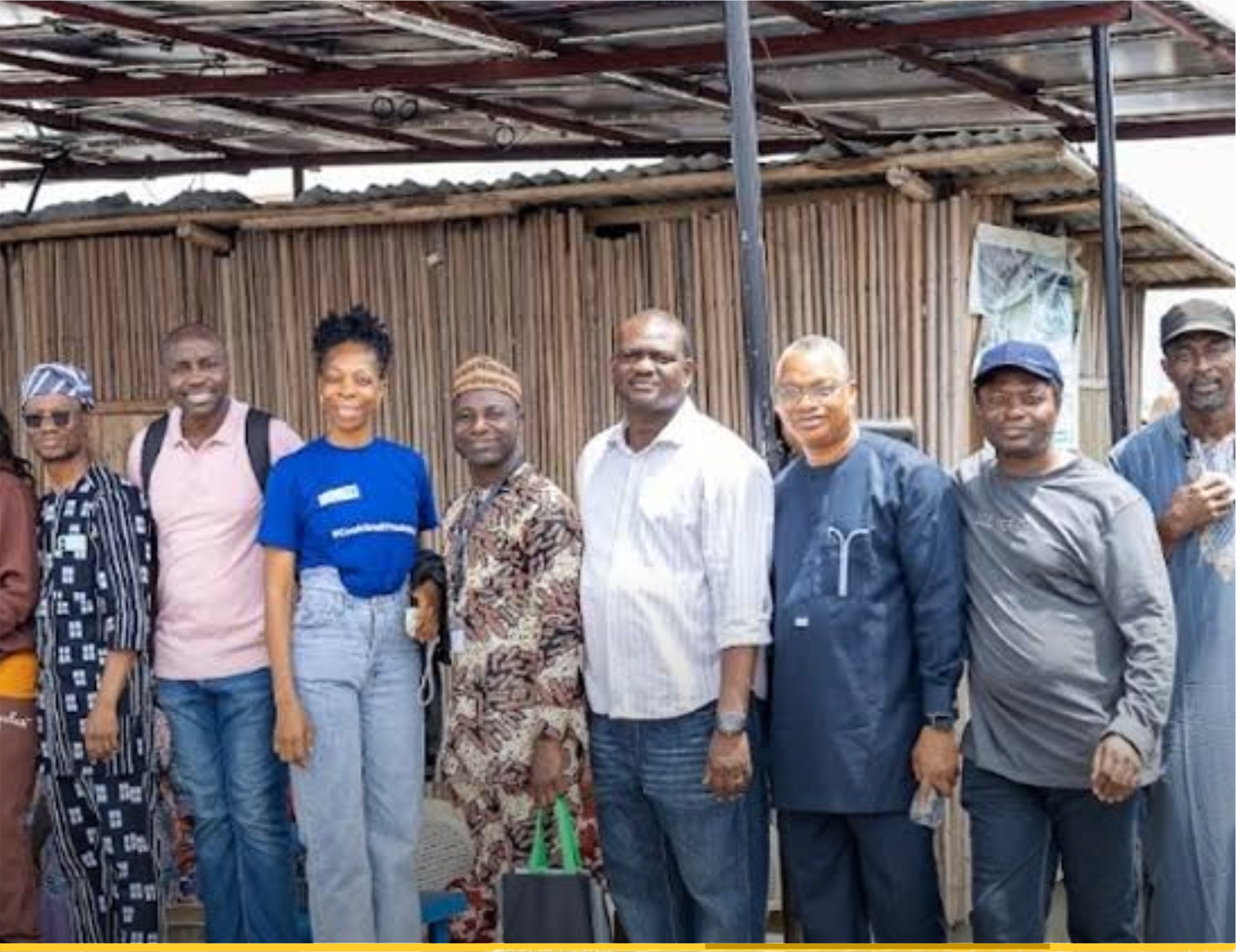
The Global Environment Facility Small Grants Programme (GEF-SGP), implemented by the United Nations Development Programme (UNDP), on Tuesday inaugurated an expanded 3-horsepower solar-powered cold room in Sagbokoji fishing community, Amuwo-Odofin Local Government Area of Lagos State. The facility is designed to strengthen fish preservation and improve the livelihoods of women in the riverine settlement. The upgraded cold room complements an existing 26kW peak solar photovoltaic power generation system. It also includes a combined 22kVA inverter and 50kWh battery energy storage system installed between 2024 and 2025. GEF-SGP UNDP Programme Assistant, Mrs. Rose Agbo, said the expansion followed requests from women beneficiaries. She stated that the earlier solar-powered freezers could no longer meet the growing demand for cold storage. She recalled that the first solar-powered cold room was installed in 2024 to help women move away from using charcoal and firewood for preserving fish. According to her, “With an additional 3hp solar-powered cooling system, the cold room is now powered solely by 100 per cent solar power with battery energy storage and inverter systems. The women are now able to preserve more of their products.” She added that GEF-SGP currently has more than 200 projects across over 30 states in Nigeria aimed at promoting sustainable community development through renewable energy and environmental initiatives. Chairman of the Nigeria Energy Forum (NEF), Dr. Daniel Adeuyi, described the project as a practical demonstration of translating policy discussions into community development. He stated, “The forum is not just to gather stakeholders together to exchange ideas. It is to translate the ideas into action. Today we have come to see the fruits of the gatherings making real impacts in communities such as Sagbokoji.” He noted that the inauguration of the 3hp solar cold room engine has further strengthened the existing solar infrastructure and called for stronger collaboration among communities, project developers, and development partners to ensure sustainability. Former President of the Nigerian Institute of Electrical and Electronic Engineers (NIEEE) and NEF Co-Chair, Engr. Adekunle Makinde, expressed satisfaction with the impact of the project. He said residents welcomed the team with smiles, dancing, and singing, and proudly showed how well the cold room is performing. He added that the association was reminded to properly manage and sustain the facility because it is expected to generate income. President of NIEEE, Engr. Felix Adeboye, urged organisations, philanthropists, and development partners to replicate similar renewable energy projects in underserved communities. He noted that Sagbokoji distinguished itself by accepting the initiative, while other communities had rejected similar interventions. Leader of the Fish Sellers Association, Sagbokoji, Mrs. Jiselle Azankpo, expressed appreciation to GEF-SGP and UNDP for completing the expansion. She stated, “We have tested it and it is working perfectly. We are so delighted about it.” She assured that members of the association will ensure proper maintenance of the infrastructure and contribute towards its upkeep to guarantee long-term sustainability.

Google Backs Major Solar and Battery Project In Arkansas

Google has signed a power purchase agreement for one of the largest solar and energy storage projects in the United States. The project is located in Mississippi County, Arkansas. The project is called the Steel River Energy Center and is being built near Wilson. It is being developed by Cypress Creek Renewables, a company based in California. Cypress Creek bought the project in March and secured $3.5 billion in financing in June, according to the Arkansas Democrat Gazette. The Steel River Energy Center will be built in two phases. It will provide 1.6 gigawatts of solar power and 1.9 gigawatts of battery storage. Construction will not be completed until 2029. Google announced the agreement this week during a ceremony in Wilson marking the start of construction. Will Conkling, head of data center energy for Google, said the project supports Google’s clean energy goals and its commitment to Arkansas. He stated that the collaboration with Cypress Creek will strengthen the grid and help provide more reliable, affordable, and clean energy to businesses and communities across the state. Google stated that the project will be built using 100% U.S.-made structural steel. The steel will be sourced from U.S. Steel’s Big River facility and manufactured at PACO Steel’s Arkansas plant. Mississippi County is the nation’s leading steel-producing county. Google also stated that clean energy deployment supports economic growth. Projects like Steel River supported more than 1.4 million American jobs in 2025. They have created new opportunities for domestic manufacturing and suppliers across the country. Google’s growing clean energy needs have increased demand for American-made steel, solar panels, batteries, and other energy technologies. Google and Cypress Creek have also established an $8 million fund to support schools in Mississippi County. Google is also developing a $4 billion data center in West Memphis. Construction began in October on the first of a possible five buildings. Google has a power contract with Entergy Arkansas for the West Memphis campus. The details of the contract have not been made public. Google is also developing a data center at the Port of Little Rock, according to the Democrat-Gazette.

Nigeria’s Solar And Battery Costs Fall As Renewable Energy Grows

Falling equipment costs, better battery storage, and smarter energy systems were the big topics at ‘Solar & Storage Live Nigeria 2026’. Industry leaders said Nigeria’s renewable energy market is now entering a new phase. Speaking to journalists at the event, President of the Renewable Energy Association of Nigeria (REAN), Ayo Adedimulua, said solar and other renewables are no longer too expensive. “Component costs have dropped by more than 100 per cent in the last 10 to 15 years. In some cases, prices have fallen by 200 to 300 per cent,” he said. He explained that this has changed how power is produced. Solar is now competing better with diesel and petrol generators. “Every naira spent on diesel or petrol is gone once it is used. But every naira invested in solar panels or batteries keeps giving value for many years,” Adedimulua said. He added that Nigeria has more than just solar. The country can also use hydro, wind, biomass and geothermal energy, but these have not been fully explored. “We have everything we need,” he said. “What we lacked before was the confidence to manage risk well.” He noted that more manufacturers, investors, banks and government officials attended this year’s conference. He said this shows growing confidence in the sector. Also speaking at the event, the Managing Director of the Rural Electrification Agency (REA), Abba Aliyu, said battery storage will be the next big area for investment. “The next wave of money will not go into power generation. It will go into storage. That is where the real change will happen,” he said. Aliyu said REA is building 48 connected mini-grids with a total capacity of about 288 megawatts. The goal is to link isolated power systems and make electricity more stable. He said all new REA mini-grids will use smart meters with Internet of Things (IoT) technology. These meters can send and receive data to help with billing, load control and maintenance. The REA boss also said the agency is using artificial intelligence to map more than 750,000 communities in Nigeria. The data helps them know where people live, what they can afford, and where projects will work best. “We know where the people are. We know what they can pay. We know which areas make business sense,” he said. On policy, Aliyu said the Electricity Act 2023 now allows state governments to regulate electricity. This, he said, opens more chances for private investors, but progress has been slow in some states. “The reform is important. States now have the power. The question is whether they have the drive to use it,” he said.

Aditya Birla Renewables To Acquire Shell’s Sprng Energy For $1.8 Billion

Aditya Birla Renewables (ABREN) has agreed to buy Sprng Energy from Shell in a deal valued at $1.8 billion. The acquisition covers 5 GW of renewable energy projects. That makes up about four-fifths of Shell’s total renewable capacity of 6.1 GW as of the end of 2025. Sprng Energy was launched in 2017 by investment firm Actis. Shell bought the company in 2022 for $1.55 billion. At the time, Shell said the deal would help it meet its net-zero target by 2050. Shell said the sale fits its new strategy announced in March 2025. The company plans to focus on flexible power generation and improve business performance, with a goal of reaching around 10% return on average capital employed by 2030. “This agreement reflects Shell’s continued focus on adjusting the portfolio in our power business,” said Machteld de Haan, President of Downstream, Renewables and Energy Solutions at Shell. ABREN will fund the deal with debt and equity from Aditya Birla Group’s Grasim and funds managed by Global Infrastructure Partners (GIP). GIP took a minority stake in ABREN late last year to support its growth. With the acquisition, ABREN’s total capacity will rise to 9.3 GW in operation and under construction. The deal will make ABREN one of the largest renewable energy companies in India. “This acquisition brings together two highly complementary platforms and marks an important milestone in ABREN’s evolution,” said Aditya Birla Group Chairman Kumar Mangalam Birla. “It positions us to participate meaningfully in one of the largest energy transformations underway anywhere in the world.” India is rapidly expanding clean energy. The country aims to reach 500 GW of renewable capacity by 2030. The government announced this week that it has already met its target of 50% of installed power from non-fossil sources, ahead of the 2030 deadline.

Renewable Energy Hit Record Growth in 2024, IRENA Report Shows

The International Renewable Energy Agency, IRENA, released its Renewable Energy Statistics 2026 on Tuesday, July 14, 2026. The report shows that electricity from renewable sources grew by 9.8% in 2024. That growth is much higher than what was recorded in 2023. Electricity from non-renewable sources like coal and gas only grew by 1.4% in the same period. Overall, renewables made up 31.7% of all electricity generated worldwide in 2024. That equals 9,836 terawatt hours of power. Türkiye, which will lead the COP31 climate talks, has set a goal to get 35% of all energy use from electricity by 2035. To reach that goal, IRENA says renewables will need to grow from 31.7% today to 78% of global electricity by 2035. That means renewable electricity will have to be about 2.5 times bigger than it is now. IRENA Director-General Francesco La Camera said the world is backing electrification as the main way to shift away from fossil fuels. He said clean electricity makes countries more secure and competitive, and that we must move faster to clean power in homes, transport and industry. UN Climate Chief Simon Stiell said the switch to clean energy is now “irreversible.” He noted that renewable power is cheaper, safer and faster to build than fossil fuels. But he also said many poor countries still need financial support to keep up. The report confirms that solar and wind power are leading the growth. Asia was the top region with 4,589 TWh of renewable electricity, a 14.3% increase. Europe produced 1,758 TWh, up 7.2%. North America generated 1,535 TWh, up 5.8%. South America made 1,047 TWh, up 2.9%. Eurasia produced 411 TWh, up 11.9%. Africa generated 227 TWh, up 5.7%. Oceania had 138 TWh, up 3.4%. The Middle East had the fastest growth at 17.3%, reaching 76 TWh. Central America and the Caribbean produced 55 TWh, up 5.8%. IRENA also updated its data on new projects. In 2025, a record 693 gigawatts of new renewable capacity was added. By the end of 2025, renewables made up 5.2 terawatts, or 49.5% of all electricity capacity in the world. New renewable projects accounted for 85.7% of all new power plants built last year. The report shows that renewable energy continues to grow much faster than non-renewable energy.

$1.5m Solar Grant Awarded to 19 African Companies, Including 8 from Nigeria

Nineteen businesses from Nigeria, Kenya, and Ethiopia have been selected to receive $1.5 million in funding to scale up the use of solar-powered equipment that generates income. The grant, disbursed under the Productive Use Financing Facility, PUFF, is expected to boost productivity, drive job creation, and strengthen local economies. Speaking on the initiative, Chianda Njogu, Director for Energy and Opportunity, Africa at the Global Energy Alliance for People and Planet, said the funds will be used to deploy 3,800 productive use appliances and support more than 3,000 green jobs across the three nations. The Nigerian companies on the list are: Asolar System Nigeria Limited, Ceesolar Energy Limited, Cloud Energy Photoelectric, Consistent Energy Ltd, D@ech Nig Ltd, Ecotutu, Sosai Renewable Energies, and GreenPower Overseas Limited. From Ethiopia, the awardees include Awdi Negesti Special Purpose Machinery Manufacturing, Center for Applied Manufacturing Service & Engineering, Green Scene Energy PLC, Inter Ethiopia, and Zicon Trading. Kenyan recipients are Agsol Limited, Epicenter Africa Limited, Plexus Energy Limited, Suncool Storage, SunCulture Kenya Limited, and Sunspot Energy Kenya, trading as Spark Possibilities. Njogu noted that although programs like Mission 300 are expanding electricity access in Africa, many businesses still cannot afford the equipment needed to turn power into profit. “These include solar water pumps, solar fridges, solar mills and other appliances that help people earn a living,” he explained. “The main challenge for African businesses is the high cost of buying and running these inefficient machines.” PUFF, which is managed by CLASP with support from the Global Energy Alliance, will help the chosen companies lower production costs and make the equipment more affordable for farmers, small businesses, and entrepreneurs. Emmanuel Aziebor, Senior Director for Africa at CLASP, said energy access alone is not enough. “Africa’s future depends on using electricity to power businesses, create employment, and improve livelihoods,” Aziebor said. “The technology is already here. What’s missing is access for the entrepreneurs who need it most. PUFF is designed to close that gap and enable more businesses to grow and contribute to local development.” He added that the market for income-generating appliances is largely untapped, reaching less than 1% of potential users in Africa. “If we can close that gap, the sector could generate nearly $16 billion annually and create 50 million new jobs over the next 10 years,” he stated. Carol Koech, Vice President for Africa at the Global Energy Alliance, said affordable financing is key to speeding up renewable energy adoption. “Our aim is to equip African entrepreneurs with the resources to expand by connecting finance, technology, markets and supportive policies, while also driving a fairer energy transition across the region,” Koech said. The funding is expected to increase access to solar-powered tools for small businesses and rural communities in Nigeria, Kenya, and Ethiopia.

China to Enforce New Energy Rules to Overhaul Solar Industry in 2027

China is set to roll out sweeping new energy efficiency regulations that could force inefficient solar manufacturers out of the market, as part of a major restructuring of its photovoltaic sector. The new mandatory standards, covering the entire solar supply chain from polysilicon to inverters, are scheduled to take effect on January 1, 2027. Authorities say the move is designed to cut excess production capacity and move competition away from price wars. The three regulations — GB 29447-2026, GB 47835-2026, and GB 47834-2026 — will set legally binding efficiency requirements for domestic solar manufacturing. Unlike past voluntary guidelines, these rules will directly impact production, procurement, imports, and project approvals for renewable energy. GB 29447-2026 targets polysilicon and germanium production by imposing stricter limits on energy use in key manufacturing processes. The tighter rules are expected to put pressure on older, power-intensive polysilicon plants while pushing companies to invest in efficiency upgrades. To comply, manufacturers may have to adopt measures such as improved heat recovery systems, hydrogen recycling, and overall process optimization. The wafer segment will also come under tighter scrutiny through GB 47835-2026, which sets new standards for monocrystalline silicon production. Industry observers say older crystal-pulling machines and inefficient wafer production lines could struggle to meet the new benchmarks as the sector shifts toward more advanced manufacturing techniques. The overhaul signals Beijing’s push to streamline the solar industry, reduce energy waste, and ensure that future growth is driven by technology and efficiency rather than low-cost overproduction.

MTN Nigeria Partners With First Watt On 34MW Solar And 40MWh Battery Rollout

MTN Nigeria has sealed a new clean energy agreement with First WATT Renewable Limited to power its telecommunications infrastructure with large-scale renewables, as the company pushes to cut emissions and move away from diesel generators. Under the deal, First WATT will deploy 34 MW of solar power and 40 MWh of battery energy storage across several of MTN Nigeria’s priority network sites nationwide. The project is focused on improving network uptime and energy efficiency. A large number of telecom sites in Nigeria rely heavily on the national grid and diesel generators, both of which come with high costs and frequent disruptions. With solar and battery systems in place, the affected sites will be able to run continuously even during grid outages. The batteries will capture surplus solar power generated during the day and discharge it at night or when sunlight is low. This is expected to reduce the use of fossil-fuel backups and drive down operational expenses across MTN’s core infrastructure. “This collaboration reflects our commitment to building a more sustainable and resilient network for our customers,” an MTN Nigeria spokesperson said. “Clean energy is central to how we power the digital economy while managing our environmental impact.” In addition to powering telecom equipment, the partnership will also roll out renewable-powered electric vehicle charging stations at selected MTN Nigeria locations. The EV charging points are part of the company’s wider sustainability roadmap and are intended to support the shift to low-emission vehicles in its fleet and staff operations. The timing aligns with a broader trend across Nigeria and Africa, where large corporates are increasing investments in renewables to meet climate goals and strengthen energy security amid rising fuel costs and grid instability. By bundling solar generation, battery storage, and EV charging into one program, MTN Nigeria is making a clear move to reduce its carbon footprint while future-proofing its operations. Industry observers note that the project could serve as a reference for the telecoms sector, demonstrating how critical infrastructure can be decarbonized at scale while supporting Nigeria’s broader energy transition goals. First WATT Renewable Limited confirmed that installations will be carried out in phases, starting with sites that have the highest energy demand. The company said the phased approach will allow for performance monitoring and optimization before a wider expansion.

Qualitas Energy Launches Tender For Up To 517 GWh/Year From Chilean Renewables Portfolio

Spanish renewables investor and fund manager Qualitas Energy has launched a competitive process to sell electricity from its portfolio of distributed generation and utility-scale plants in Chile, with contracts covering up to 517 GWh per year, energy marketplace Plataforma Energia announced. According to Plataforma Energia, which is coordinating the process through its online marketplace, the company is seeking to place power from two segments: its small distributed generation plants, locally known as PMGDs, and larger utility-scale projects located in central Chile and the Coquimbo region. The offering includes both physical and financial power purchase agreements with supply set to begin in 2028. Bidders can choose from 24/7, solar-only, or night-time supply products. Contract terms on offer range from 10, 12, to 15 years. The tender is open to a broad group of market participants, including power generators, electricity retailers, financial traders, investment banks, hedge funds, and large unregulated electricity consumers. Based on the maximum annual volume of 517 GWh and the longest 15-year term, Plataforma Energia estimates the process could cover more than 5,000 GWh of electricity over the lifetime of the contracts. Qualitas Energy entered the Chilean market in mid-2023 with the acquisition of a run-of-river hydropower plant. The firm subsequently opened an office in Santiago and expanded its footprint through Qualitas Energy Fund V with the purchase of a solar photovoltaic portfolio. The company said its mandate in Chile focuses on four core technologies: solar, wind, run-of-river hydro, and battery energy storage.