Business & Investment

Funding rounds, project finance, deals, investor activity, and market data

Solar-Powered Cold Room Expanded In Sagbokoji To Support Fish Sellers In Lagos

The Global Environment Facility Small Grants Programme (GEF-SGP), implemented by the United Nations Development Programme (UNDP), on Tuesday inaugurated an expanded 3-horsepower solar-powered cold room in Sagbokoji fishing community, Amuwo-Odofin Local Government Area of Lagos State. The facility is designed to strengthen fish preservation and improve the livelihoods of women in the riverine settlement. The upgraded cold room complements an existing 26kW peak solar photovoltaic power generation system. It also includes a combined 22kVA inverter and 50kWh battery energy storage system installed between 2024 and 2025. GEF-SGP UNDP Programme Assistant, Mrs. Rose Agbo, said the expansion followed requests from women beneficiaries. She stated that the earlier solar-powered freezers could no longer meet the growing demand for cold storage. She recalled that the first solar-powered cold room was installed in 2024 to help women move away from using charcoal and firewood for preserving fish. According to her, “With an additional 3hp solar-powered cooling system, the cold room is now powered solely by 100 per cent solar power with battery energy storage and inverter systems. The women are now able to preserve more of their products.” She added that GEF-SGP currently has more than 200 projects across over 30 states in Nigeria aimed at promoting sustainable community development through renewable energy and environmental initiatives. Chairman of the Nigeria Energy Forum (NEF), Dr. Daniel Adeuyi, described the project as a practical demonstration of translating policy discussions into community development. He stated, “The forum is not just to gather stakeholders together to exchange ideas. It is to translate the ideas into action. Today we have come to see the fruits of the gatherings making real impacts in communities such as Sagbokoji.” He noted that the inauguration of the 3hp solar cold room engine has further strengthened the existing solar infrastructure and called for stronger collaboration among communities, project developers, and development partners to ensure sustainability. Former President of the Nigerian Institute of Electrical and Electronic Engineers (NIEEE) and NEF Co-Chair, Engr. Adekunle Makinde, expressed satisfaction with the impact of the project. He said residents welcomed the team with smiles, dancing, and singing, and proudly showed how well the cold room is performing. He added that the association was reminded to properly manage and sustain the facility because it is expected to generate income. President of NIEEE, Engr. Felix Adeboye, urged organisations, philanthropists, and development partners to replicate similar renewable energy projects in underserved communities. He noted that Sagbokoji distinguished itself by accepting the initiative, while other communities had rejected similar interventions. Leader of the Fish Sellers Association, Sagbokoji, Mrs. Jiselle Azankpo, expressed appreciation to GEF-SGP and UNDP for completing the expansion. She stated, “We have tested it and it is working perfectly. We are so delighted about it.” She assured that members of the association will ensure proper maintenance of the infrastructure and contribute towards its upkeep to guarantee long-term sustainability.

Aditya Birla Renewables To Acquire Shell’s Sprng Energy For $1.8 Billion

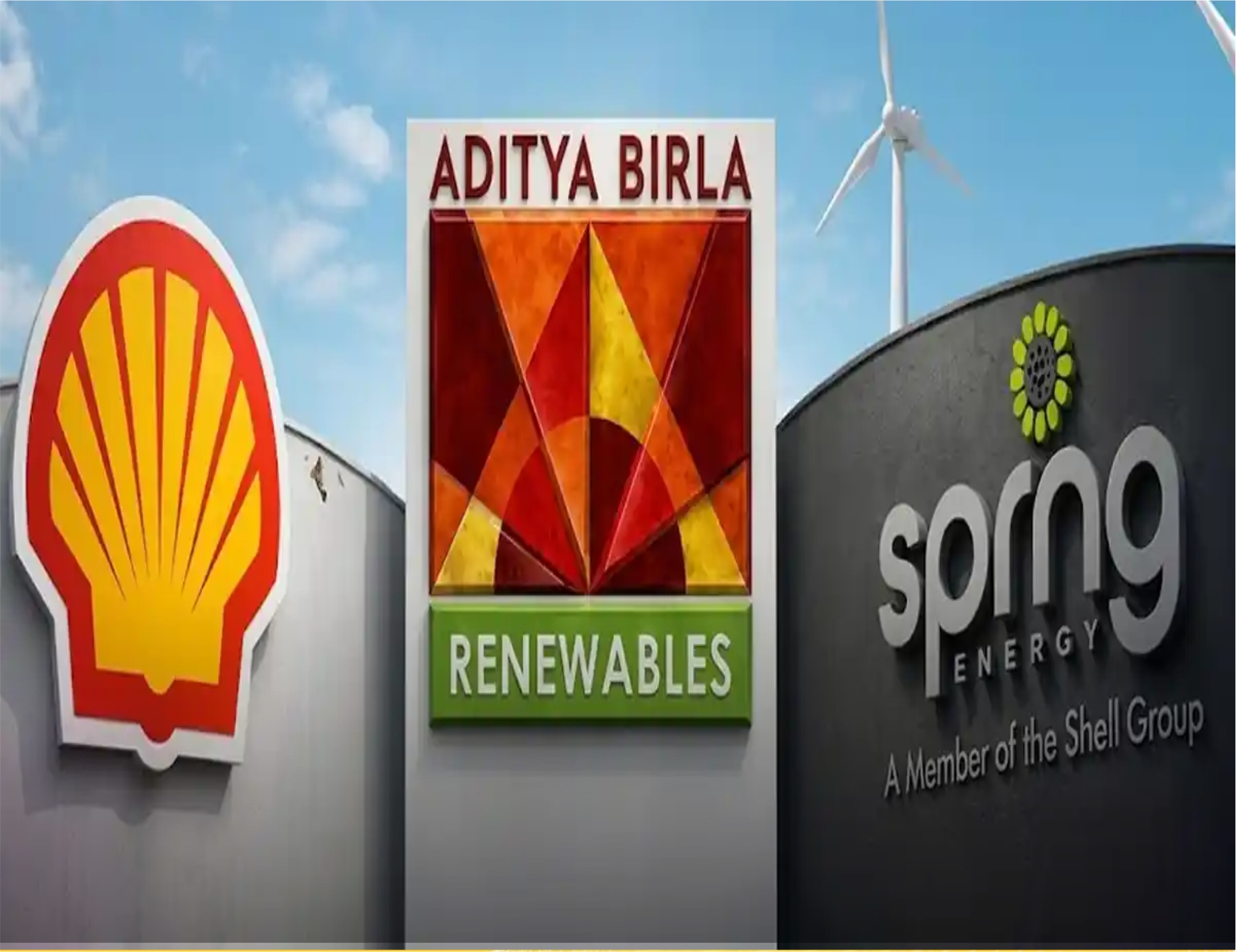
Aditya Birla Renewables (ABREN) has agreed to buy Sprng Energy from Shell in a deal valued at $1.8 billion. The acquisition covers 5 GW of renewable energy projects. That makes up about four-fifths of Shell’s total renewable capacity of 6.1 GW as of the end of 2025. Sprng Energy was launched in 2017 by investment firm Actis. Shell bought the company in 2022 for $1.55 billion. At the time, Shell said the deal would help it meet its net-zero target by 2050. Shell said the sale fits its new strategy announced in March 2025. The company plans to focus on flexible power generation and improve business performance, with a goal of reaching around 10% return on average capital employed by 2030. “This agreement reflects Shell’s continued focus on adjusting the portfolio in our power business,” said Machteld de Haan, President of Downstream, Renewables and Energy Solutions at Shell. ABREN will fund the deal with debt and equity from Aditya Birla Group’s Grasim and funds managed by Global Infrastructure Partners (GIP). GIP took a minority stake in ABREN late last year to support its growth. With the acquisition, ABREN’s total capacity will rise to 9.3 GW in operation and under construction. The deal will make ABREN one of the largest renewable energy companies in India. “This acquisition brings together two highly complementary platforms and marks an important milestone in ABREN’s evolution,” said Aditya Birla Group Chairman Kumar Mangalam Birla. “It positions us to participate meaningfully in one of the largest energy transformations underway anywhere in the world.” India is rapidly expanding clean energy. The country aims to reach 500 GW of renewable capacity by 2030. The government announced this week that it has already met its target of 50% of installed power from non-fossil sources, ahead of the 2030 deadline.

EAAIF Approves $30 Million Loan for Major Solar and Battery Project in Egypt

The Emerging Africa & Asia Infrastructure Fund, EAAIF, has announced a new $30 million loan for Hassan Allam Utilities. The funding will go toward building one of Africa’s largest combined solar power and battery storage projects in Minya, Egypt. According to the announcement, the project will include a 1,000 MW solar farm and a 660 MWh battery energy storage system, also called BESS. Once completed, the facility will help Egypt generate more clean electricity and store it for use when the sun is not shining. That will make the power supply more stable and reliable. The Minya project is being developed jointly by Hassan Allam Utilities and Infinity Power. Infinity Power is a joint venture between Masdar from the UAE and Infinity Egypt. Together, the companies plan to deliver large-scale renewable energy that can serve millions of people. This is not the first time EAAIF has backed Hassan Allam Utilities. In 2024, the fund provided a $40 million facility to support other clean energy developments. One of those is the 1,100 MW Suez Wind Project, which is being built in partnership with ACWA Power. In its statement, EAAIF said the new investment reflects its goal of “mobilising private debt for impact-led, large-scale infrastructure.” The fund said projects like this are important for helping Egypt move away from fossil fuels and toward a low-carbon economy. Egypt faces a big energy challenge. It is the third most populous country in Africa, and right now about 89% of its electricity still comes from oil, gas, and coal. To change that, the Egyptian government launched the 2035 Integrated Sustainable Energy Strategy. Under the plan, Egypt wants to increase renewable power to 42% of total electricity generation by 2030. The strategy also calls for more investment in battery storage, which is seen as key to managing solar and wind power. Martijn Proos, co-head of emerging market alternative credit at Ninety One, the fund manager of EAAIF, commented on the deal. “The expansion of our partnership with Hassan Allam Utilities supports Egypt’s transition to localised renewable power,” Proos said. “Scaling innovative financing structures alongside battery storage infrastructure strengthens grid stability and underpins sustainable growth. This transaction also provides a model for other emerging markets and developing economies seeking to decarbonise while creating high-quality green jobs.” Battery storage is important because solar panels only produce power when the sun is out. With large batteries, excess energy can be stored during the day and released at night or during peak hours. That helps prevent blackouts and reduces the need for diesel generators. EAAIF is part of the Private Infrastructure Development Group, PIDG. PIDG is a development finance organisation supported by several governments including the UK, the Netherlands, Switzerland, Sweden, Australia, and Canada. The fund is managed by Ninety One, a global investment manager. As of March 2026, Ninety One manages about £171.8 billion in assets around the world. With this new $30 million loan, Egypt takes another step toward its clean energy targets. The Minya solar and storage project is expected to create jobs during construction and operation, attract more private investment, and serve as a model for similar projects across Africa and other developing countries.

$1.5m Solar Grant Awarded to 19 African Companies, Including 8 from Nigeria

Nineteen businesses from Nigeria, Kenya, and Ethiopia have been selected to receive $1.5 million in funding to scale up the use of solar-powered equipment that generates income. The grant, disbursed under the Productive Use Financing Facility, PUFF, is expected to boost productivity, drive job creation, and strengthen local economies. Speaking on the initiative, Chianda Njogu, Director for Energy and Opportunity, Africa at the Global Energy Alliance for People and Planet, said the funds will be used to deploy 3,800 productive use appliances and support more than 3,000 green jobs across the three nations. The Nigerian companies on the list are: Asolar System Nigeria Limited, Ceesolar Energy Limited, Cloud Energy Photoelectric, Consistent Energy Ltd, D@ech Nig Ltd, Ecotutu, Sosai Renewable Energies, and GreenPower Overseas Limited. From Ethiopia, the awardees include Awdi Negesti Special Purpose Machinery Manufacturing, Center for Applied Manufacturing Service & Engineering, Green Scene Energy PLC, Inter Ethiopia, and Zicon Trading. Kenyan recipients are Agsol Limited, Epicenter Africa Limited, Plexus Energy Limited, Suncool Storage, SunCulture Kenya Limited, and Sunspot Energy Kenya, trading as Spark Possibilities. Njogu noted that although programs like Mission 300 are expanding electricity access in Africa, many businesses still cannot afford the equipment needed to turn power into profit. “These include solar water pumps, solar fridges, solar mills and other appliances that help people earn a living,” he explained. “The main challenge for African businesses is the high cost of buying and running these inefficient machines.” PUFF, which is managed by CLASP with support from the Global Energy Alliance, will help the chosen companies lower production costs and make the equipment more affordable for farmers, small businesses, and entrepreneurs. Emmanuel Aziebor, Senior Director for Africa at CLASP, said energy access alone is not enough. “Africa’s future depends on using electricity to power businesses, create employment, and improve livelihoods,” Aziebor said. “The technology is already here. What’s missing is access for the entrepreneurs who need it most. PUFF is designed to close that gap and enable more businesses to grow and contribute to local development.” He added that the market for income-generating appliances is largely untapped, reaching less than 1% of potential users in Africa. “If we can close that gap, the sector could generate nearly $16 billion annually and create 50 million new jobs over the next 10 years,” he stated. Carol Koech, Vice President for Africa at the Global Energy Alliance, said affordable financing is key to speeding up renewable energy adoption. “Our aim is to equip African entrepreneurs with the resources to expand by connecting finance, technology, markets and supportive policies, while also driving a fairer energy transition across the region,” Koech said. The funding is expected to increase access to solar-powered tools for small businesses and rural communities in Nigeria, Kenya, and Ethiopia.

China to Enforce New Energy Rules to Overhaul Solar Industry in 2027

China is set to roll out sweeping new energy efficiency regulations that could force inefficient solar manufacturers out of the market, as part of a major restructuring of its photovoltaic sector. The new mandatory standards, covering the entire solar supply chain from polysilicon to inverters, are scheduled to take effect on January 1, 2027. Authorities say the move is designed to cut excess production capacity and move competition away from price wars. The three regulations — GB 29447-2026, GB 47835-2026, and GB 47834-2026 — will set legally binding efficiency requirements for domestic solar manufacturing. Unlike past voluntary guidelines, these rules will directly impact production, procurement, imports, and project approvals for renewable energy. GB 29447-2026 targets polysilicon and germanium production by imposing stricter limits on energy use in key manufacturing processes. The tighter rules are expected to put pressure on older, power-intensive polysilicon plants while pushing companies to invest in efficiency upgrades. To comply, manufacturers may have to adopt measures such as improved heat recovery systems, hydrogen recycling, and overall process optimization. The wafer segment will also come under tighter scrutiny through GB 47835-2026, which sets new standards for monocrystalline silicon production. Industry observers say older crystal-pulling machines and inefficient wafer production lines could struggle to meet the new benchmarks as the sector shifts toward more advanced manufacturing techniques. The overhaul signals Beijing’s push to streamline the solar industry, reduce energy waste, and ensure that future growth is driven by technology and efficiency rather than low-cost overproduction.

WeLight To Invest $650 Million In Nigeria’s Solar Mini-Grids To Power Off-Grid Communities

Pan-African clean energy firm WeLight has unveiled a $650 million plan to scale up solar mini-grid projects across Nigeria, an investment worth about ₦975 billion aimed at bringing electricity to millions in areas with poor or no grid supply. The announcement was shared on X by Olusegun Dada, Special Assistant to the President on Social Media. According to WeLight, the program is expected to grow its rural customer base by ten times and speed up access to dependable, clean power in parts of the country that remain largely unserved. The company, which already runs decentralized solar mini-grids in several African nations, said the new rollout will target communities left out of the national grid managed by the Transmission Company of Nigeria. Instead of relying on long-distance transmission lines, WeLight will install localized solar photovoltaic systems paired with lithium-ion battery storage to deliver power directly to homes and businesses. The model is designed to cut transmission losses and shield communities from nationwide grid collapses. Officials noted the timing is critical as many Nigerian towns still depend on diesel and petrol generators because of frequent outages and insufficient supply from the central grid. WeLight said it will prioritize rural and agricultural areas where steady electricity can drive productivity. Planned uses include agro-processing, irrigation, cold storage, and small-scale manufacturing. Both residential and commercial customers will be connected under the expansion, which the company says will significantly close the electricity access gap in historically neglected regions. “Our mini-grids are built to match local demand,” a company statement read. “This ensures communities get continuous power without depending entirely on the national network.” The $650 million commitment comes weeks after WeLight raised $31 million in new capital to accelerate its entry into Nigeria and other African markets. The round included investment from the International Finance Corporation, the World Bank Group’s private-sector arm, alongside existing backers. The firm pointed to similar projects in East Africa as proof of concept. In Kenya, for example, the Rural Electrification and ­Renewable Energy Corporation has worked with private developers to roll out solar mini-grids in Turkana, Garissa, and Marsabit counties. Nigeria continues to grapple with a major electricity shortfall, with millions of households and businesses forced to self-generate. Off-grid renewable solutions like solar mini-grids have gained traction among government agencies, development banks, and private investors as a faster way to expand access. Energy experts say investments such as WeLight’s are part of a wider push to electrify Africa, particularly in countries like Nigeria and the Democratic Republic of Congo that have some of the largest populations globally without reliable power.

EDP TO DIVEST FULL STAKE IN 68-MW ITALIAN WIND AND SOLAR PORTFOLIO IN EUR 150 MILLION DEAL WITH PLT ENERGIA

Portuguese utility giant EDP has agreed to sell its entire equity interest in a 68-MWac/70-MWdc wind and solar portfolio in Italy, as the company continues to reshape its renewable asset base and recycle capital into new growth markets. In a statement issued on Tuesday, EDP said its renewables unit, EDP Renováveis, signed a sale and purchase agreement with PLT Energia SRL. The transaction values the portfolio at an estimated enterprise value of around EUR 150 million, or about USD 171 million. The final price will be subject to customary adjustments at closing, in line with standard market practice. The assets covered by the deal include four onshore wind farms with a combined capacity of 60 MW, plus one solar photovoltaic plant rated at 9 MWac/8 MWdc. The wind parks are backed by 20-year Contracts for Difference, CfDs, which provide long-term revenue stability. The solar facility operates under 10-year Power Purchase Agreements, PPAs, with offtakers. Geographically, all of the plants are located across southern Italy, specifically in the regions of Puglia, Basilicata and Campania. EDP said the average remaining life of the wind assets is about 11 years, while the solar plant has been operational for less than one year. For EDP, the sale aligns with its broader strategy of asset rotation. The Lisbon-based utility has been actively selling mature renewable projects to fund the development of new capacity in higher-growth markets, while also reducing debt and strengthening its balance sheet. Italy remains a core European market for EDP, but the company has been trimming exposure to older, non-core portfolios. PLT Energia SRL, the buyer, is an Italian independent power producer focused on expanding its renewables footprint domestically. The acquisition will add immediate operating capacity to PLT’s portfolio, along with long-term contracted cash flows from the CfDs and PPAs. EDP noted that the deal remains subject to standard closing conditions, including regulatory approvals. Barring any delays, the company expects the transaction to be completed during 2026. The divestment comes at a time when investor appetite for operational renewables in Southern Europe remains strong, driven by Italy’s decarbonization targets and the steady demand for clean power from industrial and commercial buyers. With 20-year CfDs on the wind assets and new PPAs on the solar farm, the portfolio offers PLT a predictable revenue stream for the next decade or more. By exiting the 68-MW package, EDP frees up EUR 150 million to redeploy into its development pipeline in Europe, North America and Latin America, where the group is targeting gigawatts of new solar, wind and storage projects through the end of the decade.

POLARIS RENEWABLE SIGNS 30-YEAR DEAL WITH CFE FOR 200MW OF SOLAR-PLUS-STORAGE PROJECTS IN MEXICO

Canadian renewable energy firm Polaris Renewable Energy Inc. has signed a mixed investment agreement with Mexico’s state utility Comision Federal de Electricidad, CFE, for three solar-plus-storage projects with a combined capacity of more than 200MW. The agreement was executed through Polaris’ Mexican project structure with fiduciary trustee Banca Mifel SA, Institucion de Banca Multiple, Grupo Financiero Mifel, acting on behalf of CFE. The 30-year deal sets the framework for joint participation by Polaris and CFE in the development, financing, construction, ownership and operation of the three projects. The projects were selected under Mexico’s Mixed Development Program, which aims to procure about 6,500MW of new renewable generation and energy storage capacity by 2029. Polaris CEO Marc Murnaghan said the signing represents a key milestone in advancing the three awarded projects into long-term contracted operating assets. He noted that the agreement reflects strong collaboration between Polaris and CFE. The company is also progressing toward financial close and construction, while advancing a growing pipeline of additional renewable energy and storage opportunities in Mexico. Murnaghan added that Mexico remains a core growth market for Polaris and that the company intends to expand its presence while supporting the country’s energy transition. According to Polaris, both parties will now work to finalize the remaining definitive agreements required for the program. These include power purchase agreements, a trust agreement, management services agreement, operation and maintenance agreement, and other related project documentation. Commercial operation of all three plants is scheduled for 2028. The Mixed Development Program is central to Mexico’s plan to accelerate clean energy deployment and reduce reliance on fossil fuels. By combining solar generation with battery storage, the three Polaris-CFE projects are expected to provide more stable and dispatchable power to the grid, helping to address peak demand periods and improve reliability in regions with growing electricity needs. Government officials have said storage-enabled renewables will be critical to meeting Mexico’s climate and energy security goals over the next decade. For Polaris, the agreement deepens its footprint in Latin America, where it already operates hydro, solar and wind assets. The company said it is prioritizing markets with clear long-term policy frameworks and strong utility partners. With construction set to begin following financial close, the Mexico portfolio is expected to contribute significantly to Polaris’ target of doubling its operating capacity by 2030, while also creating jobs and local supply chain opportunities during the development and operation phases.

UK PACT NIGERIA ENERGY TEAM UNVEILS PLAN TO ATTRACT PRIVATE CAPITAL INTO SMALL HYDRO PROJECTS

On June 25, 2026, AP3 Advisory and Ratio Consulting, the implementing partners for the United Kingdom’s Partnering for Accelerated Climate Transitions, UK PACT, Nigeria Energy Programme, delivered a detailed strategy to tap Nigeria’s small hydropower resources using private investment. The plan was presented to the Minister of Power, Joseph Olasunkanmi Tegbe, during a high-level session at the Federal Ministry of Power in Abuja. The session, themed “Mobilising Private Sector Capital to Catalyse Small Run-of-River Hydropower at Scale for Rural Electrification and Industrialisation,” brought together senior officials from the Federal Ministry of Power, the Rural Electrification Agency, REA, officials from the British High Commission, development finance institutions, state representatives, utility operators, and private investors. The focus was on identifying actionable routes to fast-track funding for Nigeria’s largely idle hydropower sites. AP3 Advisory used the forum to illustrate how Nigeria’s existing run-of-river facilities can be repurposed into profitable renewable energy projects through brownfield small hydro development, without placing a heavy financial burden on the Federal Government. The team pointed to Nigeria’s roughly 14GW of technically feasible hydropower capacity, noting that over 85 per cent of it is still unused even after years of public spending on water infrastructure. As the lead partner for the UK PACT Nigeria Energy Programme’s small hydro component, AP3 Advisory also updated stakeholders on three pilot sites: NESCO Cascade in Plateau State, Ikere Gorge in Oyo State, and Ghari Dam in Kano State. The goal of the pilots is to show that bankable project preparation, thorough technical work, and strong public-private partnerships can create renewable energy systems that expand rural electricity access, support productive uses, and stimulate industrial growth. According to Dr. Gori Olusina Daniel, Managing Partner at AP3 Advisory and Programme Director for UK PACT, the effort is not limited to the three pilot locations. The programme has already carried out substantial technical and commercial risk mitigation, including pre-feasibility studies, investment-grade financial models, environmental and social impact reviews, regulatory assistance, and the creation of a National Small Hydropower Asset Register. That register highlights more than 32 priority brownfield locations with over 500MW of capacity that could be developed in the near term. Dr. Paul Healey, Head of Private Sector and Green Growth at the British High Commission and representative of the UK Foreign, Commonwealth and Development Office, FCDO, restated the UK’s resolve to back Nigeria’s energy transition through responsible private financing. Minister Tegbe received the proposal positively, calling small hydropower a key element of Nigeria’s broader energy mix. He pledged the government’s continued support for increasing generation capacity and for solutions that are both financially sustainable and deliver clear development outcomes. The meeting ended with talks on policy steps needed to scale deployment nationwide, including drafting Nigeria’s first National Small Hydropower Policy, improving regulatory alignment, and maintaining joint efforts to draw private money into renewable energy infrastructure. Through the UK PACT Nigeria Energy Programme, the UK continues to assist the Federal Government in advancing commercially viable renewable projects aimed at broadening energy access, enhancing infrastructure resilience, and speeding Nigeria’s shift to a cleaner and more diversified power sector.

RIVE PRIVATE INVESTMENT BACKS SPAIN’S REBI TO EXPAND THERMAL DECARBONISATION AND RENEWABLE INFRASTRUCTURE

European asset manager RIVE Private Investment has taken a stake in REBI, a Spanish family-owned company that specialises in renewable energy infrastructure and thermal decarbonisation solutions, marking a new push into Spain’s heating transition market. The financial terms and the size of the investment were not disclosed in the statement released by Alantra, which served as the financial adviser on the transaction. Alantra said it acted as exclusive M&A adviser to RIVE throughout the deal, providing strategic advice, financial structuring, asset analysis and return assessment. REBI designs, develops and operates thermal decarbonisation solutions for both industrial and residential customers, with a portfolio that includes district heating networks, heat pumps and biomass-fired boiler systems. The company’s focus is on helping clients replace fossil-fuel heating with lower-carbon alternatives, a segment that is gaining traction across Europe as governments tighten emissions rules for buildings and industry. Founded in 2013, RIVE is an independent asset manager with a mandate centered on energy transition and transportation assets. The Paris-based firm currently manages more than EUR 1 billion, or about USD 1.14 billion, in assets and has completed more than 100 transactions across the continent. Its strategy typically involves partnering with specialized operators to scale proven decarbonisation technologies. For RIVE, the REBI investment adds exposure to Spain’s heating sector at a time when district heating and electrified heat pumps are being positioned as key levers to cut emissions in urban and industrial clusters. For REBI, the backing of a dedicated energy transition investor is expected to support growth, new project development and the rollout of additional biomass and heat pump systems to a wider customer base. Market observers note that thermal decarbonisation has become a priority for European investors, as the EU’s building efficiency directives and industrial decarbonisation targets create long-term demand for alternatives to gas boilers. With Alantra’s advisory role and RIVE’s capital, REBI is positioned to accelerate its expansion in a market that is shifting rapidly toward renewable heat.