Author: Chinenye

INDIA BECOMES WORLD’S THIRD-LARGEST IN RENEWABLE ENERGY CAPACITY, BUT IMPORT DEPENDENCE REMAINS

India has moved up to become the world’s third-largest country in installed renewable energy capacity, according to a new report by Morgan Stanley, as the country pushes to cut reliance on fossil fuel imports and meet its climate targets. The report said India’s energy transition will help reduce external dependence in the long term, but its success will hinge on how quickly domestic manufacturing of critical components such as solar cells, wafers, and polysilicon can be scaled up. Data from the Ministry of New and Renewable Energy, MNRE, shows rapid growth in domestic production. Solar module manufacturing capacity nearly doubled from 38 gigawatts in March 2024 to 74 gigawatts in March 2025. Solar cell capacity also rose sharply, from 9 gigawatts to 25 gigawatts over the same period. Despite the expansion, India continues to rely heavily on imports for upstream parts of the solar supply chain. In the financial year 2025, the country imported about 35 million solar modules worth approximately 1.6 billion US dollars. The report estimates that 60 to 80 per cent of those imports came from China. Overall, non-fossil fuel sources now account for more than half of India’s total installed power capacity. Clean energy capacity has crossed 262.7 gigawatts, representing over 50 per cent of the national total. Solar and wind power made up the bulk of new additions. Morgan Stanley noted that while downstream manufacturing has grown, localizing wafer and polysilicon production remains a key challenge. Building capacity in these segments will be crucial for India to secure its supply chain, lower costs, and meet its renewable energy goals without continued import exposure. The government has set ambitious targets to expand renewable energy as part of its broader energy security and decarbonization strategy.
IVORY COAST COMMISSIONS 52.4MW SOLAR PLANT IN PUSH TO MEET 2035 RENEWABLE ENERGY TARGET

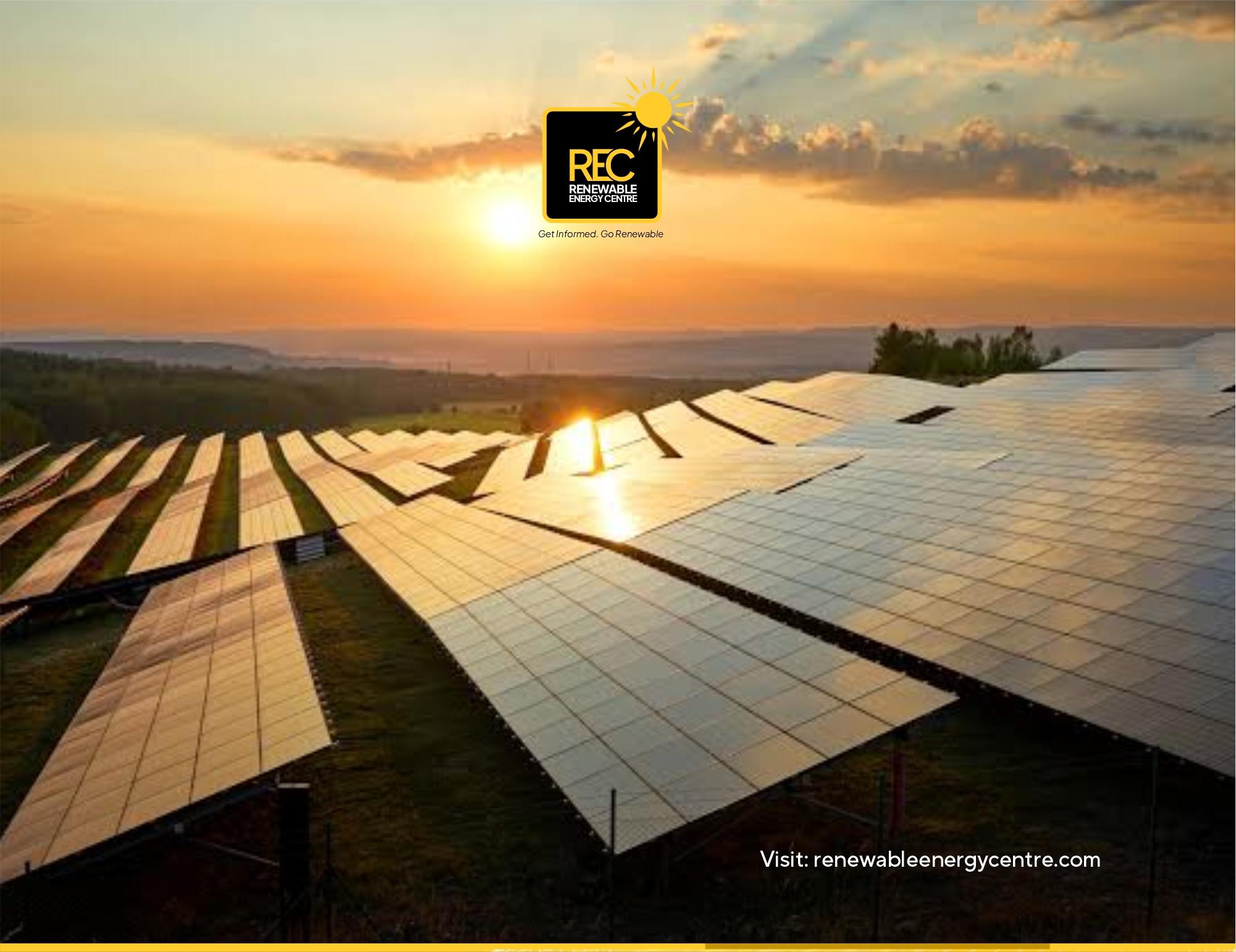
I­vory Coast on Friday inaugurated a new 52.4-megawatt, MW, solar power plant in the north of the country, marking another major step in the government’s drive to expand clean energy and meet climate goals set in 2021. The Ferke Solar plant, located in Ferkessedougou, was officially opened in a ceremony attended by government officials, energy sector stakeholders, and development partners. Mines Minister Mamadou Sangafowa Coulibaly, who commissioned the facility, said the project reflects the administration’s commitment to diversifying the national electricity mix and accelerating the energy transition. “Today’s ceremony fits perfectly with the strategy for Ivory Coast… namely to accelerate the country’s energy transition by diversifying its electricity mix through the expansion of renewable energy capacity,” Coulibaly said at the event. According to PFO Africa, the Ivorian infrastructure investment group behind the project, the plant will supply electricity to 370,000 households and directly serve about 2 million people, primarily in the northern Ferkessedougou region and surrounding communities. The company noted that the new solar facility will help reduce pressure on the national grid in the north, an area that has historically faced power supply challenges. It is also expected to lower transmission losses and improve energy reliability for homes, businesses, and public institutions in the region. Construction of the plant was financed by PFO Energies, a subsidiary of PFO Africa. The group holds 100 per cent Ivorian shareholding. The Ferke Solar plant will operate on a Build-Own-Operate-Transfer, BOOT, basis. Under the arrangement, PFO Energies will build, own, and operate the plant for a defined period before transferring ownership to the Ivorian government. Officials said the model is designed to attract private investment into the power sector while ensuring that critical energy infrastructure eventually comes under state control. The launch comes as Ivory Coast, the world’s largest cocoa producer, seeks to reposition itself as a leading electricity supplier in West Africa. The government aims to have 46 per cent of its electricity mix come from renewable sources by 2035, up from current levels dominated by thermal generation. Ivory Coast currently has an installed power capacity of roughly 3,000 MW. The bulk of this is generated from oil and gas-fired plants. Beyond meeting domestic demand, the country already exports electricity to Ghana, Burkina Faso, Benin, Togo and Mali, and officials say expanding renewables will strengthen its role as a regional power hub. Energy analysts say the addition of utility-scale solar is critical to achieving the 2035 target, reducing dependence on imported fossil fuels, and shielding consumers from volatile global gas prices. The Ferke project adds to a growing pipeline of renewable developments in Ivory Coast, including hydro and solar initiatives aimed at cutting carbon emissions while expanding access to electricity nationwide. Government officials said more solar and hybrid projects are expected to be rolled out in the coming years as part of the national climate and energy strategy.

RENEWABLES CUT GLOBAL FOSSIL FUEL SPENDING BY $480 BILLION IN 2025, IRENA REPORTS

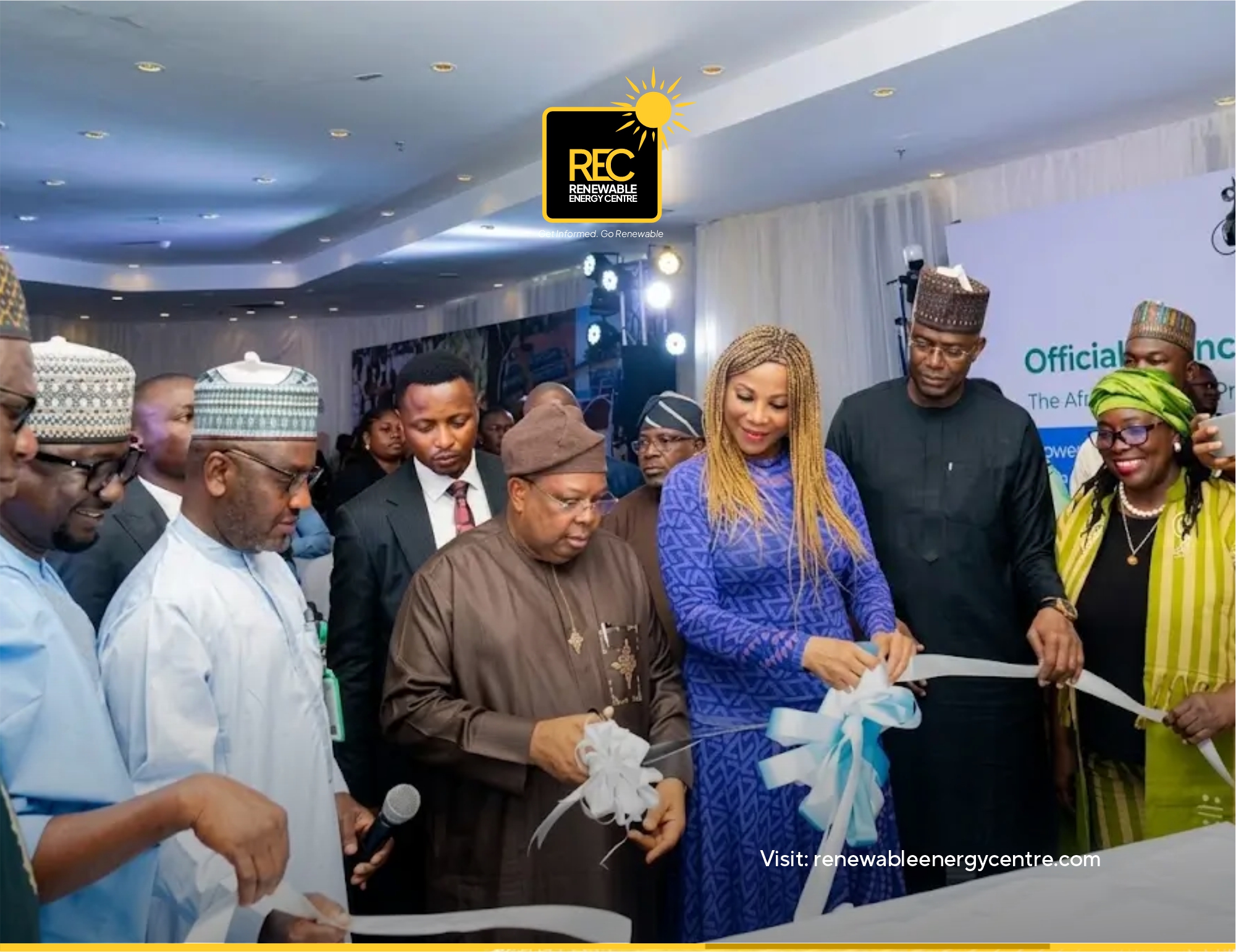
The worldwide rollout of renewable energy helped economies avoid an estimated $480 billion in fossil fuel expenses last year, strengthening the economic argument for clean power. The finding was highlighted as the United Nations and Nigeria’s Federal Government jointly advocated for wider renewable uptake on June 2nd through the Africa Mini-Grids Programme, AMP. The figures reflect a broader move away from reliance on fossil fuels toward distributed renewable systems. Experts stressed that the shift is now powered less by climate goals alone and more by cost advantages, energy security, and system resilience. IRENA’s Renewable Power Generation Costs in 2025 report found that over 90 per cent of utility-scale renewable capacity added globally in 2024 produced electricity more cheaply than the least expensive new fossil fuel option. Solar PV costs held steady at $44 per megawatt hour, MWh, while onshore wind dropped four per cent to $33/MWh. Offshore wind also eased by three per cent to $78/MWh. In contrast, new gas-fired power became more expensive in multiple markets. Combined-cycle gas plant capital costs rose markedly, and generation costs climbed close to $100/MWh in Italy, Germany, and Japan, driven by elevated gas prices and supply risks. IRENA said the build-out of renewables saved countries roughly $480 billion in fossil fuel outlays in 2025, helping to shield economies from swings in global fuel markets. Francesco La Camera, IRENA’s Director-General, said the continued fall in clean energy costs is generating major financial gains for nations investing in renewables. He added that each new renewable project offers greater insulation against fossil fuel price volatility and boosts a country’s competitive position. The agency noted that renewables provided an additional economic cushion after disruptions to global energy flows, including the temporary closure of the Strait of Hormuz earlier this year, which pushed import prices higher across parts of Asia and Europe. Officials at the AMP launch said the programme has commissioned 23 new solar-powered mini-grids in communities that lacked reliable electricity, serving homes, small businesses, and agro-processing operations. They argued that dependable power is changing rural economies by raising farm output, enabling local businesses, and generating jobs. The focus, they added, should extend beyond grid connections to using energy as a driver of growth, food security, and improved living standards. Minister of Power Joseph Teghe described AMP as a key pillar of Nigeria’s transition plan. He said the government intends to scale decentralized renewable solutions to reach underserved areas, as well as health facilities, universities, and agricultural hubs. UN Resident and Humanitarian Coordinator in Nigeria, Mohamed Malick Fall, said clean energy access is one of the most urgent issues of this era, and that expanding electricity is essential for sustainable growth and inclusion. Speaking at the AMP launch, he noted that the transition is about more than lights and sockets, it powers hospitals, schools, enterprises, and job creation, while raising incomes and quality of life.

UNDP URGES FASTER SHIFT TO RENEWABLES, SAYS OIL DEPENDENCE RAISES CONFLICT AND SUPPLY RISKS

The United Nations Development Programme has urged countries to speed up their move away from fossil fuels to renewable power, cautioning that continued reliance on oil leaves nations exposed to conflict, supply shocks, and environmental harm. Speaking at the Abuja launch of the Nigeria component of the Africa Minigrids Programme on Thursday, UNDP Resident Representative in Nigeria, Ms. Elsie Attafuah, said recent global energy developments have underscored the pressing need for energy systems that are both cleaner and more resilient. She pointed to ongoing geopolitical tensions as evidence of the world’s vulnerability when it depends heavily on petroleum. Citing the Strait of Hormuz, she noted that the waterway only gained widespread attention during the recent Iran-related crisis, yet any interruption there would have far-reaching consequences worldwide. According to Attafuah, the central challenge is no longer the availability of oil and gas reserves, but the instability of international supply chains that can bring economies to a standstill when they are disrupted. She further observed that many African oil-producing states have endured extended conflicts tied to petroleum resources. In contrast, she said Africa has vast renewable energy potential that can support long-term growth without triggering resource-driven disputes. She added that expanding clean energy would also cut pollution and help address the climate impacts already affecting the continent. Attafuah described the Africa Minigrids Programme as one of UNDP’s most far-reaching energy access efforts. The initiative was unveiled with UNDP Administrator Achim Steiner at COP27 in 2022. She said it  breaks away from piecemeal, donor-driven rural electrification by using a model built for scale and driven by private capital. The programme, she explained, emphasizes sustainability and business viability by opening space for private investors while supplying low-cost clean power to communities that are off the main grid. Communities that once relied on expensive diesel, she added, would now pay for electricity from renewable mini-grids, allowing investors to recoup costs and reducing overall energy expenses. She argued that Africa is uniquely placed to lead a global transition to renewables, given that millions still lack electricity and the continent is not locked into extensive legacy fossil infrastructure. Governments, she said, should treat renewable mini-grids as strategic, long-term investments that can reshape national power systems over the next 20 years, rather than as isolated rural projects. On Nigeria’s role, Attafuah said the country was chosen as the programme’s flagship because of its established renewable energy framework and government support, which make it well-positioned to attract new international financing. She noted that the initiative is already producing concrete outcomes, and stressed that its ultimate measure of success will be the wider social and economic change it delivers, beyond just megawatts of electricity.

UK PACT NIGERIA ENERGY TEAM UNVEILS PLAN TO ATTRACT PRIVATE CAPITAL INTO SMALL HYDRO PROJECTS

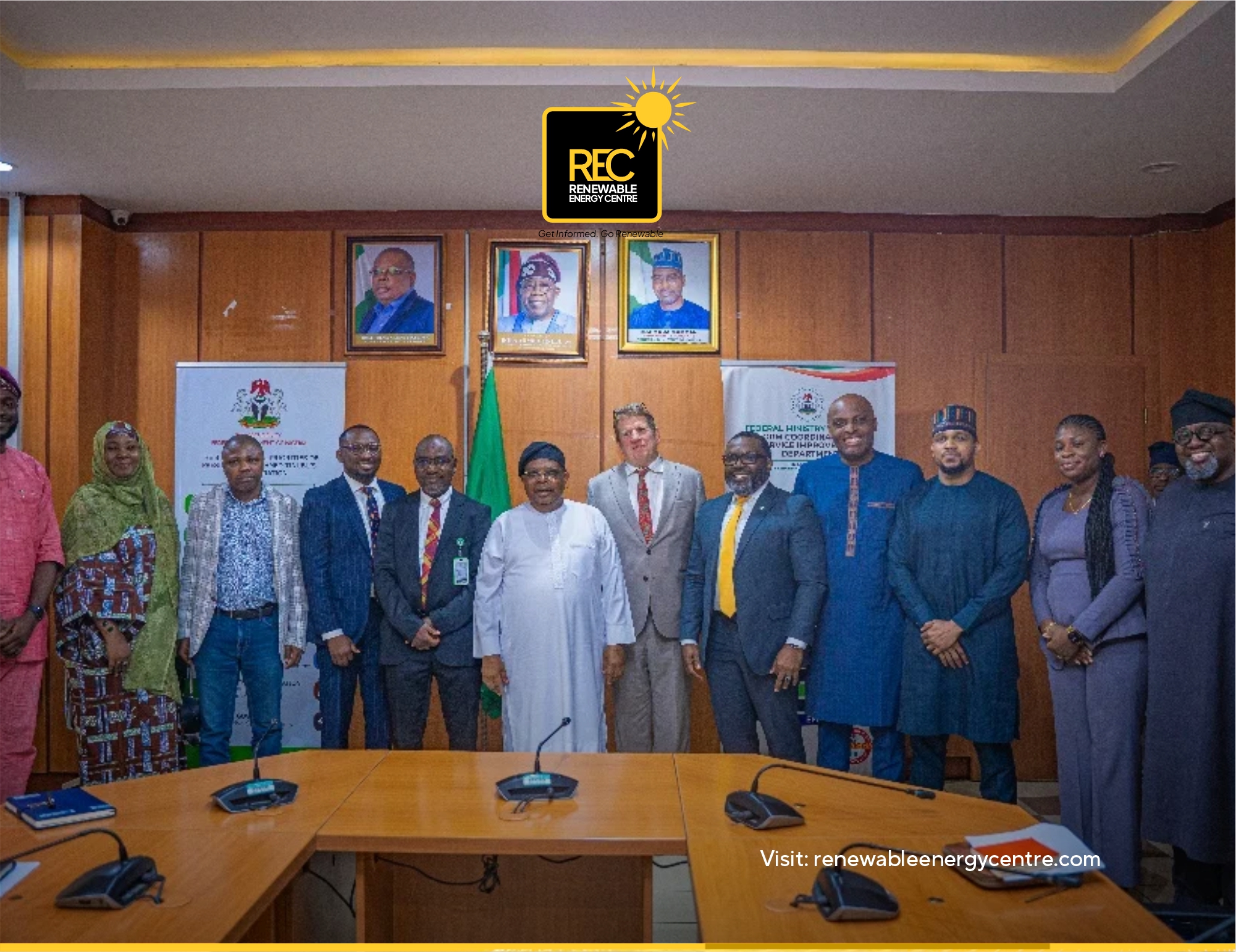
On June 25, 2026, AP3 Advisory and Ratio Consulting, the implementing partners for the United Kingdom’s Partnering for Accelerated Climate Transitions, UK PACT, Nigeria Energy Programme, delivered a detailed strategy to tap Nigeria’s small hydropower resources using private investment. The plan was presented to the Minister of Power, Joseph Olasunkanmi Tegbe, during a high-level session at the Federal Ministry of Power in Abuja. The session, themed “Mobilising Private Sector Capital to Catalyse Small Run-of-River Hydropower at Scale for Rural Electrification and Industrialisation,” brought together senior officials from the Federal Ministry of Power, the Rural Electrification Agency, REA, officials from the British High Commission, development finance institutions, state representatives, utility operators, and private investors. The focus was on identifying actionable routes to fast-track funding for Nigeria’s largely idle hydropower sites. AP3 Advisory used the forum to illustrate how Nigeria’s existing run-of-river facilities can be repurposed into profitable renewable energy projects through brownfield small hydro development, without placing a heavy financial burden on the Federal Government. The team pointed to Nigeria’s roughly 14GW of technically feasible hydropower capacity, noting that over 85 per cent of it is still unused even after years of public spending on water infrastructure. As the lead partner for the UK PACT Nigeria Energy Programme’s small hydro component, AP3 Advisory also updated stakeholders on three pilot sites: NESCO Cascade in Plateau State, Ikere Gorge in Oyo State, and Ghari Dam in Kano State. The goal of the pilots is to show that bankable project preparation, thorough technical work, and strong public-private partnerships can create renewable energy systems that expand rural electricity access, support productive uses, and stimulate industrial growth. According to Dr. Gori Olusina Daniel, Managing Partner at AP3 Advisory and Programme Director for UK PACT, the effort is not limited to the three pilot locations. The programme has already carried out substantial technical and commercial risk mitigation, including pre-feasibility studies, investment-grade financial models, environmental and social impact reviews, regulatory assistance, and the creation of a National Small Hydropower Asset Register. That register highlights more than 32 priority brownfield locations with over 500MW of capacity that could be developed in the near term. Dr. Paul Healey, Head of Private Sector and Green Growth at the British High Commission and representative of the UK Foreign, Commonwealth and Development Office, FCDO, restated the UK’s resolve to back Nigeria’s energy transition through responsible private financing. Minister Tegbe received the proposal positively, calling small hydropower a key element of Nigeria’s broader energy mix. He pledged the government’s continued support for increasing generation capacity and for solutions that are both financially sustainable and deliver clear development outcomes. The meeting ended with talks on policy steps needed to scale deployment nationwide, including drafting Nigeria’s first National Small Hydropower Policy, improving regulatory alignment, and maintaining joint efforts to draw private money into renewable energy infrastructure. Through the UK PACT Nigeria Energy Programme, the UK continues to assist the Federal Government in advancing commercially viable renewable projects aimed at broadening energy access, enhancing infrastructure resilience, and speeding Nigeria’s shift to a cleaner and more diversified power sector.

RIVE PRIVATE INVESTMENT BACKS SPAIN’S REBI TO EXPAND THERMAL DECARBONISATION AND RENEWABLE INFRASTRUCTURE

European asset manager RIVE Private Investment has taken a stake in REBI, a Spanish family-owned company that specialises in renewable energy infrastructure and thermal decarbonisation solutions, marking a new push into Spain’s heating transition market. The financial terms and the size of the investment were not disclosed in the statement released by Alantra, which served as the financial adviser on the transaction. Alantra said it acted as exclusive M&A adviser to RIVE throughout the deal, providing strategic advice, financial structuring, asset analysis and return assessment. REBI designs, develops and operates thermal decarbonisation solutions for both industrial and residential customers, with a portfolio that includes district heating networks, heat pumps and biomass-fired boiler systems. The company’s focus is on helping clients replace fossil-fuel heating with lower-carbon alternatives, a segment that is gaining traction across Europe as governments tighten emissions rules for buildings and industry. Founded in 2013, RIVE is an independent asset manager with a mandate centered on energy transition and transportation assets. The Paris-based firm currently manages more than EUR 1 billion, or about USD 1.14 billion, in assets and has completed more than 100 transactions across the continent. Its strategy typically involves partnering with specialized operators to scale proven decarbonisation technologies. For RIVE, the REBI investment adds exposure to Spain’s heating sector at a time when district heating and electrified heat pumps are being positioned as key levers to cut emissions in urban and industrial clusters. For REBI, the backing of a dedicated energy transition investor is expected to support growth, new project development and the rollout of additional biomass and heat pump systems to a wider customer base. Market observers note that thermal decarbonisation has become a priority for European investors, as the EU’s building efficiency directives and industrial decarbonisation targets create long-term demand for alternatives to gas boilers. With Alantra’s advisory role and RIVE’s capital, REBI is positioned to accelerate its expansion in a market that is shifting rapidly toward renewable heat.

SEOUL, SOUTH KOREA — SK INC. AND KKR LAUNCH KOREA’S LARGEST CLEAN ENERGY COMPANY

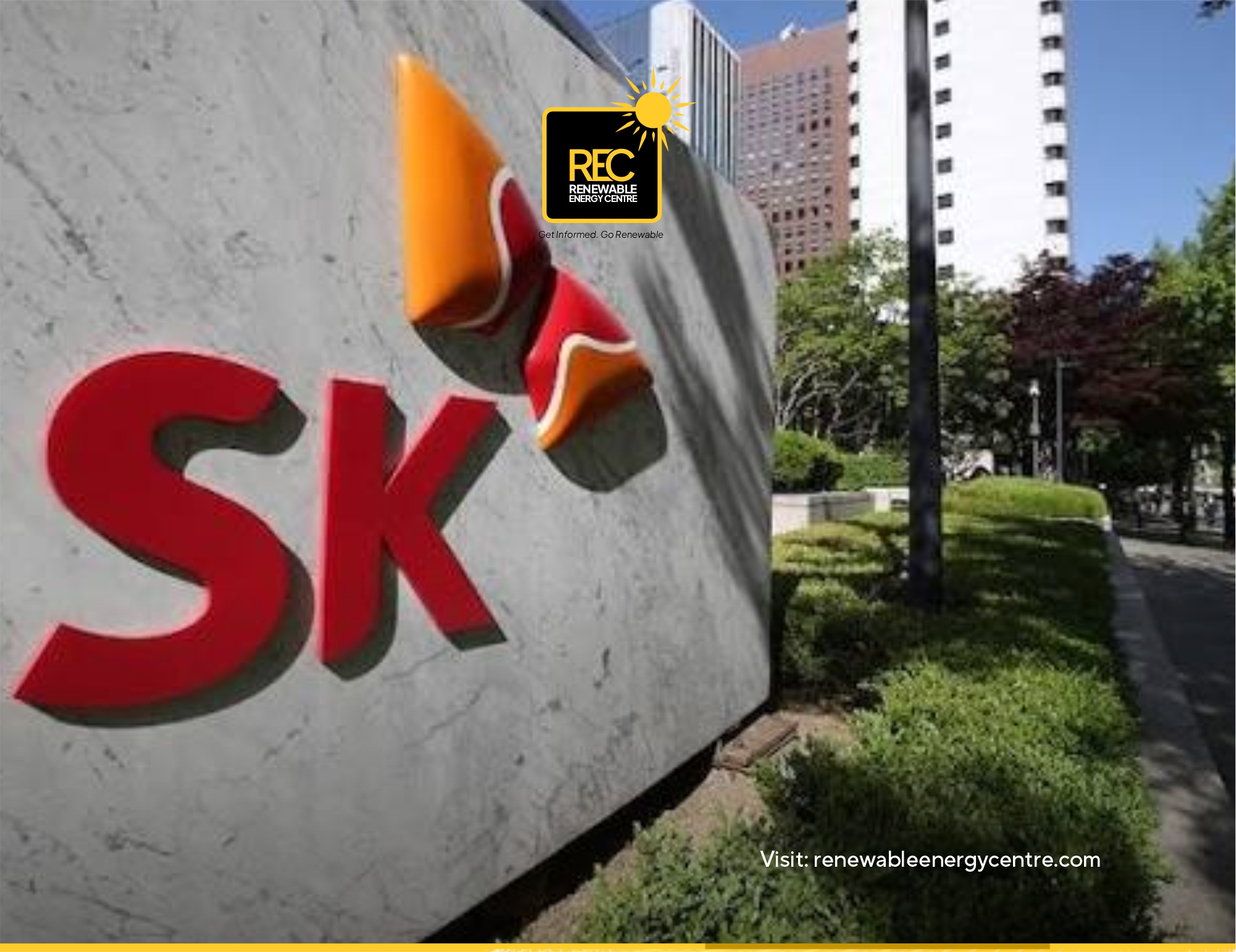
SK Inc. (“SK”) and KKR, a leading global investment firm, have signed final agreements to create Korea’s largest renewable energy company, with a value of about KRW 2 trillion, or roughly $1.3 billion. Through this new company, called the “Platform,” SK and KKR will combine renewable energy assets that were previously held by different SK companies into one single business. These assets cover solar power, wind power on land and at sea, and fuel cells, and the new setup will allow both companies to use their experience in running projects and investing in clean energy. This launch is the latest project between KKR and SK, and it builds on a long relationship that already includes several other collaborations. The new company will help Korea meet the fast-growing demand for clean electricity from AI data centers, semiconductor factories, and other large industrial users. In the beginning, KKR will have management control of the company, while SK will be an equity investor and will keep the option to discuss taking control in the future. The Platform will bring together renewable energy businesses from SK Innovation, SK ecoplant, and SK eternix, so it will cover the full process from project development and construction to operation and maintenance. By combining all of these parts, the company can operate on a larger scale and run more efficiently. The Platform will manage all types of renewable energy except hydrogen, including solar power, offshore wind, onshore wind, and fuel cells. With this scale, the Platform will be Korea’s biggest renewable energy business. It currently has about 1.7 gigawatts of capacity in operation, and its development plans will increase that to 10 gigawatts in total. That amount of power is enough to run 100 large data centers that each use 100 megawatts, nonstop and at the same time. At this size, the Platform is in a strong position to provide steady, large-scale clean power to Korea’s most demanding industrial customers, from AI data centers to global semiconductor production lines and other heavy users. Keith Kim, a Partner at KKR, said they are pleased to work with SK, which is a strong local partner with deep operational experience in Korea. He added that Korea is one of Asia’s most attractive markets for renewable energy because there is strong demand for clean power from the semiconductor, data center, and manufacturing sectors. Together, KKR and SK are building a leading, large-scale renewable energy company that can supply reliable clean power to Korea’s most energy-intensive industries. SK is combining these renewable energy businesses as part of a planned effort to reshape its portfolio and make it more sustainable and competitive. By bringing together the financial strength of a global fund with SK’s ability to execute projects, SK aims to respond to the rising demand for clean energy and create a business model that can grow over the long term. KKR is funding this investment mainly through its Asia Pacific infrastructure strategy. KKR is one of the most active infrastructure investors in the world, with more than $100 billion in infrastructure assets under management and over $31 billion invested in energy transition and renewable infrastructure since 2011. In Asia Pacific, KKR has already supported the region’s clean energy shift through companies such as Serentica Renewables in India, which supplies power to large industrial users, CleanPeak Energy in Australia, which runs a distributed energy business, and Zenith Energy in Australia, which provides off-grid energy solutions. SK plans to use the launch of the Platform to strengthen its renewable energy business and support its future growth. At the same time, SK will continue to adjust its portfolio to improve capital efficiency and make its overall business more competitive. KKR is a leading global investment firm that provides alternative asset management, as well as capital markets and insurance solutions.

NEW PROJECT MEDIA EXPANDS INTO ASIA-PACIFIC WITH INTEGRATED RENEWABLES AND DATA CENTER COVERAGE

Market intelligence firm New Project Media, NPM, has entered the Asia-Pacific region, extending its data and events coverage to one of the world’s fastest-growing power and digital infrastructure markets. The company said its APAC platform will start by tracking Australia, Japan, South Korea, Taiwan, and key Southeast Asian markets, with plans to broaden coverage across the wider region over time. The service will monitor renewable energy project pipelines, power market activity, grid interconnection, policy and regulatory changes, financing, mergers and acquisitions, and data center development. By combining renewables and data center intelligence at launch, NPM said it is applying the same supply-and-demand model it uses in other markets to APAC from the outset. Shaun Drummond will head the expansion. Drummond, who previously served as APAC Managing Editor at Infralogic, will lead NPM’s editorial direction and manage the company’s Asia-Pacific reporting team. The move follows NPM’s established growth pattern. It introduced its North American utility-scale coverage in January 2020, added distributed generation in April 2023, entered Europe after acquiring Energy Rev and launching coverage in April 2024, and rolled out data center coverage in February 2025. “APAC coverage is a defining milestone for NPM and marks our transition into a truly global intelligence platform,” said Ken Meehan, Founder and Chief Executive of New Project Media. He noted the firm began with utility-scale renewables in North America and has since expanded into distributed generation, Europe, data centers, API integrations, and AI-driven intelligence through NPM Edge. “APAC brings that full investment cycle together and extends our platform into one of the most important growth regions for power, renewables and digital infrastructure,” Meehan added. Brett Birman, Chief Commercial Officer, said client demand is driving the launch. “APAC is increasingly important to our customers, yet it remains complex and difficult to track with consistency,” Birman said. “That is exactly where NPM has always created value. We help clients see market and participant activity earlier, save time, assess what is viable and act before opportunities become obvious to everyone else.” New Project Media provides market intelligence, data, and events to 500 global clients, including developers, investors, advisers, corporates, and infrastructure operators.

NIGERIA’S RENEWABLE ENERGY DRIVE GAINS MOMENTUM AS INVESTMENTS TARGET INDUSTRIAL GROWTH AND ACCESS

­Nigeria is seeing a coordinated push to scale renewable energy that government officials and investors say could support the country’s industrial expansion and its target of a $1 trillion economy. The momentum comes as global energy systems are being redesigned at speed. Solar capacity is expanding faster than at any point in history, while electricity demand is changing. Beyond households and traditional industries, new drivers such as electric mobility, data centers, cloud computing, and manufacturing are reshaping consumption. In Nigeria, that global shift is now backed by a growing wave of investments and funding for renewables. The federal government, through the Rural Electrification Agency, REA, is leading the effort in partnership with private investors and development partners, with an enabling policy environment providing support. In Niger State recently, the state government handed over 500 hectares of land for a 200MW solar project that will power Abuja Steel Mills. Officials say the project is not only about generating electricity but about creating a model for how renewable energy can directly support industrial growth, local manufacturing, job creation, and economic transformation. Development partners are also committing significant capital. The United Nations Development Programme, UNDP, under its Africa Minigrids Program, AMP, with funding from the Global Environment Facility, GEF, and in partnership with RMI, the African Development Bank, and the REA, has invested over $5.9 million across 23 sites in Nigeria. The funding is designed to support women as leaders in sustainable energy. UNDP estimates the mini-grid investments will mitigate about 74,000 metric tons of CO₂ over their lifetime by replacing diesel and fuelwood with solar, and has already transformed the lives and businesses of more than 20,000 people. The International Finance Corporation, IFC, a member of the World Bank Group, in partnership with Norfund, the Norwegian Investment Fund for developing countries, is providing up to $83.2 million to expand last-mile power access. The financing will back five Renewable Energy Service Companies, RESCOs: Darway Coast Nigeria Limited, GVE Projects Limited, Prado Power Limited, PriVida Power Limited, and StarTimes Energy. The package includes $35.3 million in concessional debt from the IDA Private Sector Window Blended Finance Facility and IFC’s Concessional Capital Window. Together, the initiatives represent an estimated $271 million in capital expenditure to deploy 315 solar hybrid mini-grid sites and connect 2.9 million people to clean electricity. Private sector companies are also scaling up. In May 2025, Sun King, in partnership with IFC and Stanbic IBTC Bank, secured an $80 million, fully Naira-denominated loan facility to expand off-grid solar access in Nigeria. Co-Founder Anish Thakkar said at the time that “off-grid solar provides the fastest and most scalable pathway to universal electrification across Africa.” The investment aligns with Nigeria’s Country Partnership Framework with the World Bank Group and contributes to Mission 300, a joint initiative with the African Development Bank launched in 2025 to expand electricity access across the continent. Commercial banks are building dedicated facilities as well. First City Monument Bank, FCMB, launched a $188 million Green Finance Facility alongside the REA to support sustainable infrastructure, and had earlier announced a ₦100 billion dual-currency fund for energy access expansion. Lotus Bank has also partnered with the REA on a ₦100 billion interest-free renewable energy financing line to ensure market-tailored credit reaches underserved communities. More recently, WeLight, described as one of Africa’s largest rural electrification companies, said it will invest in Nigeria by 2027. Backed by €27 million from IFC and an earlier Memorandum of Understanding with the REA, the company plans to deploy and operate 400 mini-grids and 50 MetroGrids in Nigeria by 2030. The REA says it is prioritizing locations where reliable power can quickly translate into productivity and revenue, rather than attempting to solve every challenge at once. That approach informs the federal government’s “Electricity Growth Zones,” areas where electricity supply, economic demand, infrastructure investment, and private capital are deliberately aligned. Officials argue that distributed energy can move faster than traditional infrastructure when economics, policy, and technology align, and that solar-plus-storage, embedded generation, and dedicated renewable infrastructure can support the $1 trillion ambition in ways conventional grid supply alone may struggle to deliver in the short term. Speaking at the Lagos Chamber of Commerce and Industry, LCCI, Renewable Energy Outlook Conference, REA Managing Director Dr. Abba Aliyu said, “If Nigeria creates predictable pipelines of mini-grids, public-sector solarization, embedded generation, industrial solar systems, and large renewable projects, manufacturers will have the confidence to invest.” He added, “If manufacturers invest, projects become cheaper, supply chains become stronger, jobs are created, and the economy captures more value.” Under Dr. Aliyu’s leadership, the agency is moving away from its past reputation as a vehicle for constituency projects and is positioning itself as a market-enabling institution. The REA says it is building the data, standards, project pipelines, demand aggregation models, and financing partnerships that allow the private sector to scale. With capital now flowing from development finance institutions, private equity, and commercial banks, officials say the coming decade will be defined by renewables.

FINNISH INVESTOR WINS RARE SWEDISH APPROVAL FOR HYBRID SOLAR-STORAGE PLANT

  Finnish renewable energy investor Korkia has secured a key environmental permit to develop one of Scandinavia’s largest hybrid renewable energy sites, marking a significant milestone for solar deployment in a region traditionally dominated by wind and hydro. The approval, granted by the County Administrative Board of Dalarna to Korkia Renewables Development Sweden, will allow the company to construct a 150-MWp solar photovoltaic plant alongside a 150-MW/600-MWh battery energy storage system, BESS, in the Vilmoren forest area of Dalarna county. The Smedjebacken Project: Scale and Output Collectively known as the Smedjebacken project, the integrated facility is designed to maximize grid stability and energy output. Once commissioned, the solar array is expected to generate approximately 150 GWh of clean electricity annually, enough to power tens of thousands of Swedish households. The co-located 150-MW/600-MWh battery system will store excess solar generation during peak daylight hours and discharge it during periods of high demand or low sunlight, helping to balance the grid and reduce curtailment risks. Korkia confirmed that the project has already secured a grid connection agreement with the local network operator. With the environmental permit now in hand, the development is advancing toward “ready-to-build” status, with final investment decisions and engineering work expected next. A Rare Approval in Scandinavia According to Korkia, permits for utility-scale solar and storage hybrids remain uncommon across Scandinavia. The region’s renewable pipeline has historically focused onshore wind and hydropower, while large solar farms have faced regulatory, climatic, and land-use hurdles. The Smedjebacken approval therefore stands out as one of the few projects of comparable scale to clear environmental review in Sweden. Korkia said the decision signals growing regulatory openness to diversifying Sweden’s clean energy mix and integrating more dispatchable solar capacity to complement intermittent wind resources. “The hybrid model is critical for the next phase of the energy transition here,” a Korkia spokesperson noted. “Pairing solar with long-duration storage allows us to deliver reliable, carbon-free power even in a northern latitude.” Part of a Broader Global Permitting Push The Swedish milestone caps an active first half of 2026 for Korkia across its international portfolio. The company reported several other permitting successes earlier this year, underscoring its expansion strategy beyond the Nordics. Those wins included environmental approvals for two separate solar projects in Alberta, Canada, a new substation development in Chile to support grid integration, and a series of licenses for both solar and storage projects in Romania. With Smedjebacken now permitted, Korkia is positioning the site as a flagship example of how hybrid solar-plus-storage can be deployed at scale in markets where such projects are still emerging. Construction timelines will depend on final financing and procurement, but the firm says it is moving quickly to keep the project on track for delivery in the coming years. As Sweden looks to meet its long-term decarbonization targets, the Smedjebacken hybrid plant could help set a precedent for more large-scale solar and storage development across the wider Nordic region.